

The World Cup – one month that feels like three but seems to fly by nonetheless. Russia 5-0 Saudi Arabia may as well have happened years ago for all it means today. Day-by-day new talking points emerged; new heroes and villains were created; each story bulldozed into history as the next one dropped unceremoniously into view. This is the Yard of Grass take on 4 weeks the likes of which won’t be seen again for another 4 years.
VAR
The undoubted star of the early games of this World Cup and the greatest talking point was the Video Assisted Referee. I’m in favour of it. I think it works and I was very disappointed to hear normally intelligent people like Didi Hamann so brazenly dismiss it. No one said it would be perfect and no one said that all controversy would be removed. It exists simply to give the referee a second (third, fourth, fifth etc.) opportunity to look at an incident again and make his or her mind up with additional evidence. If the referee is fully confident in his or her decision, play goes on as normal. I never understood any of the concerns, even with some teething issues. It’s not that slow; it has helped inordinately with punishing defenders fouling from set-pieces and has removed the “I didn’t see it” excuse from the referees. As the tournament went on, it was called into use less and less frequently and barely merited mention in some of the quarters and semi-finals.
Of course, as we all knew it would, it was called into play in the final, and it was here where it showed exactly why it’s a good thing. The referee completely missed the Perisic incident. He therefore had absolutely no opportunity to make a judgment on this handball. VAR was called into play, and he made the call to give a penalty. I didn’t think it was a peno; most people I know didn’t; but most of the RTÉ panel did; and most importantly the referee did. VAR did what it’s supposed to do – give the ref a chance to administer the rules as he sees fit.
According to BBC , 335 incidents were checked during the group stage, which equates to around seven per game. 14 on-field reviews were made by referees and three reviews made by the VAR team. Without VAR, referees called 95% of incidents correctly but the system improved that to 99.3%. We’re now miles from the chaos of Liverpool vs West Brom in the FA Cup in January, or even the madness of Portugal vs Iran only a few weeks ago. That 4% jump in accuracy is the difference between Argentina beating England in 1986; Henry’s handpass to Gallas; Ramos’ being red-carded for smashing Karius; and it was the difference in many, many incidents throughout this World Cup. FIFA deserve credit for bringing it in on this stage at this point. The uproar over it, in particular in the tabloid world across the water, looks a bit silly now. Of course it can be improved, and knowing the conversation the referees are having is the next logical step in making it more transparent. People will still moan about it, and may even point to the penalty decision in the final as proof that it’s a failure, but they will have missed the point completely. Again.
Brian Kerr
One of the more irritating aspects of modern media is how viral memes take hold and eventually make a boring mockery of the things they were intended to celebrate. It got a bit like that with Brian Kerr as the tournament went on and he was reduced – in the eyes of the football illiterati – to a one-liner factory. The truth is that Brian Kerr is a truly brilliant football man. A diligent worker, never found wanting in terms of information, knowledge, or – above all else – genuine insight. We know more about football after hearing Brian co-commentate than we did before. Sometimes a lot more, and that’s a talent.
The fact that he is a 1-man Dublinese Preservation Society merely adds another layer to his value. The quips and one-liners can be priceless, and his description of a shirtless Shaqiri may go down as one of the great Irish football quotes, but he knows his stuff more than anyone watching. His insistence, during the Croatia vs Denmark shoot-out, in relation to the rule whereby keepers cannot move from their line before a penalty is taken was a bit much, but we know that beneath that lay the rage at the injustice meted out to the Ireland U-17’s in similar circumstances only a few weeks previously.
Brian Kerr is also Ireland’s most successful coach and the mentor for much of the last generation that represented us on the World Stage. He also has the highest win percentage of any permanent Ireland senior team manager. He is one of our best footballing brains, personalities and characters, and he had a brilliant World Cup.

Individualism vs The Collective
As has been said countless times before, football is a microcosm of society. As we move more and more towards an atomised, individualised world, where the real joy of the shared experience has been replaced by the ever-elusive joy of experience-sharing, football has become more and more about the individual, with the heightened importance of Ballons d’Or and individual stats and records. World Cup 2018 kicked back against that trend, even if for a brief moment.
England – more on whom later – epitomised this. In the past, individual world-class stars comprised a team of abject failures. The early exits of Ronaldo, Messi and Neymar signalled a period of irrelevance for all of them. More on them later too. The starless Russians making the quarter final through the type of collective action that made their preceding State so powerful was a message. Belgium, for all their stars and all their personality issues, were dragged forward by the less glamorous, selflessness of Lukaku and Fellaini as much as by De Bruyne and Hazard. Dotted throughout the tournament were glorious team efforts which made their mark on a great tournament – South Korea vs Germany; Japan’s performance vs Belgium; Sweden making the last 8 with few, if any, decent players (remember we fairly played them off the park with Zlatan in Euro 2016!).
No other team performance matched that of Croatia however. Inspired, or more simply just led, by the footballing treasure that is Luka Modric, their journey to the final was a lesson for us all. Three times they faced extra-time. The balls required of Modric to take a shoot-out penalty in the last-16 against Denmark having just missed one to send them through cannot be overestimated. The suckerpunch late equaliser from the Russians sending their next tie to penalties as well was another gargantuan test of steel, character and unity. They passed. England once again took them to extra-time and once again Croatia emerged victorious. Modric started the tournament as the star man alongside Rakitic and Mandzukic, but in these games new household names emerged – Rebic, Vida, and Vrsaljko, all took their place alongside the former three while Ivan Perisic raised his solid reputation to world-class heights as well. Credit too to the oft-maligned Dejan Lovren – not many players ever get to play in either of the games two great showpiece finals. He played in both within 6 weeks. Bad players simply do not get to do that.
Football is a team game and while the narrative around the Super Clubs and the global megastars throughout the regular season may tell us different, international football through June and July 2018 reminded us of the purity of our sport and the potential for achievement beyond the rational; that collective action trumps individual actions. A message to how we run our affairs beyond football perhaps.

Ronaldo vs Messi
Following on from the above, we can finally put this tiresome debate to bed. It doesn’t matter. Both of these colossal football geniuses, corporate powerhouses, and inspirations to the masses cowered in the monstrous shadow of the beautiful game itself. Irrelevant after the last 16, giving way to Mbappe, Griezmann, Cavani and Suarez, as Argentina surrendered to the French when only 2 goals separated them, while Portugal crashed out 2-1 to Uruguay. The two greatest players in the world were gone. The world got over it and the greatest show on earth rumbled on relentlessly. Millions more would go on to be inspired by others.
Neymar
The pretender to the formers shared crown left Russia in disgrace; a parody of a modern footballer; the epitome of the selfish, petulant cheating blackguard we all hate. Had Firmino played instead of Neymar – an unthinkable choice in all fairness – they would have gone further, and this is something Brazil will have to consider in the future.
England
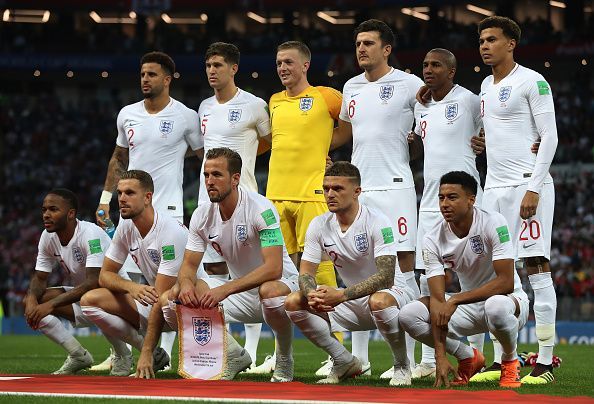
Well it wouldn’t be an Irish football blog without a big ol’ piece on the English. And what a tournament they had! Didn’t they? Was this not the greatest performance since Euro 96? Their best World Cup since 1990? While yes technically, this was their first appearance in the last 4 since those tournaments, behind that albeit meaningful fact lies another – England never beat a good team, and always looked vulnerable to a meeting with the likes of Croatia.
They scraped past Tunisia in a way that would embarrass other European nations, Ireland included. They dismissed Panama efficiently and then lost the reserves exhibition match against Belgium. So their World Cup did not start until the last 16 against Colombia without their star man James Rodriguez. Again, this was not a real match, with a poor, dreadful Colombia reducing it to a scrap. The dramatic late equaliser was deserved and the game did give a hint as to what could await in later rounds, because when Colombia played football, England looked quite vulnerable. They eventually drew and then proceeded to put their penalty hoodoo to bed. In doing so, they probably garnered greater benefits than had they won 1-0, or even strolled to victory by 2 or 3 goals. This game galvanised England, the team and the nation. A routine win over Sweden – how they got this far is anyone’s guess – and they had reached the promised land – the semi-final.
Yet still it felt like their tournament was only starting. Compared to Euro 96 where they came out of the group on fire, screaming into the last 16 with a comprehensive 4-1 disassembly of the Netherlands, following a 2-0 win over Scotland. They reached the semis with a hard-fought penalties victory over Spain – not a vintage Spanish side, but a Spanish side nonetheless. They had battled to this point. Ditto Italia 90. Hard-fought draws with Ireland and Holland and a 1-0 win over Egypt gave them top spot in the group. An extra-time winner against a decent Belgian side was then followed by a bit of an epic 3-2 victory over a Cameroon side who can probably still lay claim to have had the best African performance at a World Cup (Senegalese and Ghanaians may disagree). Again, they had battled to the semi-finals. In both these tournaments, every match meant a lot and every match was competitive. Their tournaments in 1990 and 1996 started at the first whistle and ended in agony to German penalties.
This was different, and while they are absolutely right to celebrate and do all the things one does during a summer of renewed love for your football team, in the cold hard light of day (or 5 minutes after the final whistle if yer a Corkman on ITV), the analysis will tell the truth. This is not a revolution for English football. Not yet. They were efficient, their most memorable performance being the victory over Colombia, but they are still behind many other nations, some of whom may have exited earlier this time but are unlikely to do so again. In the Euros in 2 years time, you will not see Spain descend into chaos on the tournament’s eve; Germany will not go out with a whimper at the group stage; and the Dutch and Italians will be there. As Keane said, this was their big chance. 2018 and all the factors around the quirks of the draw did give England a fine chance not only of making the final but owing to the randomness of one-off games, of actually winning it. It’s unfortunate that a once-in-a-generation opportunity came too early in this squad’s evolution, but it did.
But let’s not piss on all their chips. Let’s talk about the good things about England this summer. For a start, they have comprehensively and definitively washed away years and years of negativity. Two years ago, I raged about the dreadful English football culture in the wake of the Iceland defeat in Euro 2016. The national team was a lost cause and there were too many factors that needed addressing for it to change. They then appointed Sam Allardyce and seemed to be destined for 2 more years of bad football; an absence of adventure, vigour and youth, followed by a 2nd round or quarter-final exit at best. Instead, Allardyce blew it completely thanks to a pint of wine and some shady conversations, and they appointed Southgate. Hardly earth-shattering, but he has turned out to be exactly the type of manager England have craved for many years. Since 1996 they have bounced back and forth between old-school “up and at em” Englanders and experienced, considered foreigners. Southgate seems to represent the best of both worlds (I accept Hodgson did too, but he was possibly out of his depth as he had been at Anfield). He is a young, outward-looking, intelligent man but steeped in English football culture. His open approach to the media and his ability to forge a collective team spirit where half a dozen of his predecessors failed, was admirable. They have found a man in Southgate who could conceivably hold this job for a decade – and win something.
England also have the nucleus of a decent side when it reaches its peak. Most of the squad are kids in footballing terms and will have matured immeasurably as a result of this run. Watch out for them at Euro 2020, and it’s possible one may wish to avoid them altogether in 2022. The signs are pretty good and if they add one or two more over the next couple of years, this could be a good side. Then again, they reached the semi-final in 1990 and look how they fared over the next 2 tournaments.
The Winners
France were worthy champions. Any team that can find the net 4 times on 2 occasions in a knock-out setting deserves to win the tournament. They tore into Argentina; dismissed Uruguay; smothered Belgium; and taught Croatia a lesson in clinical, brutal, harsh football. They were simply brilliant. It’s difficult to decide which French performance was best, but I think the discipline they showed in beating Belgium – who were probably the 2nd best team in Russia – was immense. It wasn’t a classic semi-final in terms of excitement, but the weariness of some neutrals would have been offset by the depths of the tension felt by French and Belgians watching that. You could not take your eyes off it even when nothing of note had happened for more than five minutes. A gripping encounter which could have flipped entirely in a split second.
We knew going in to this tournament that this squad had great talent. They ran out of steam in the Euros, strangled by the Portuguese, but 2 years older and wiser, Deschamps’ charges never looked like slipping up. All of their men showed up for duty – Pogba showing his worth; Griezmann too. Even Giroud – who I think is very underrated – had a constructive tournament. Mbappe stole the show however. His pace coupled with his abilities on the ball, made an absolute mockery of the Argentinians in the last 16, and he kept it up right into the final. The emergence of Pavard was also a major plus for the French. They played a classic tournament, holding back reserves in getting through the group, and then catching fire when needed, and sitting back when needed. It’s hard to believe 2 decades have passed since Deschamps lifted the trophy as captain – his is a remarkable, remarkable achievement to do so again as manager and to write his name alongside Beckenbauer and Mario Zagallo. The France of 1998 and 2000 was the best international team that had been seen since 1970. The Spanish team of 2008-12 eclipsed that one. The question is can this team go on and win more. It’s difficult to see any reason why not, other than the fact that it is extremely difficult and therefore extremely rare for it to happen. No one has retained the World Cup in 56 years. The only countries to hold the World Cup and European Championship together are Spain and France those 2 times, and West Germany in 1974. France will get better, but as I said earlier, so will a lot of other teams. They were great winners of a great tournament and they can rightly enjoy this one for now.
Football
This was the showpiece event for the sport. The greatest show on earth. It doesn’t always work out though. Some tournaments are forgotten about, barely to be mentioned again, while others are etched in the collective conscience for generations to come and not just for the quality on the pitch – they are epic summer events that help shape the game itself. Russia 2018 could not have taken place at a more cynical time. Within football, you had the money getting more and more ridiculous; personality-driven hype was drowning the communal essence of the game; diving; cheating; harassment of officials. Within Russian sport, you had the stench of drugs and Sochi lurking, alongside the threat of hooliganism whipped up by the British press. Outside sport, there was the murky goings-on between Putin and Trump hanging around; the poisonings in Salisbury and then again in Amesbury during the tournament; Ukraine; and the general feeling that this was a country where basic freedoms were being denied. There was an unease about Russia 2018 to the extent that the old idiom whereby once the first ball was kicked, you could forget about everything else, rang truly hollow. Football could do without all of this other stuff, it was struggling enough under the weight of its own baggage.
Then the first ball was kicked. With it, we were treated to one of the most dramatic, explosive and ridiculous tournaments of all time, which even 3,200 words cannot even start to do justice to. So many late goals, so many upsets. Relentless drama upon relentless drama. Out go the Germans, undone by South Korea in a comical manner; out go Messi and Ronaldo on the same day; the hosts dump Spain; Belgium scrape past Japan with one of the greatest counter attacking goals you’ll ever see in one of the most incredible contexts you’ll ever see – on and on it went. It was the most enjoyable tournament I’ve witnessed without Ireland being in it. It was exactly what football needed – what it was crying out for. It put international football back where it belongs – not only at the top, but way, way out ahead of club football. Teams rose and fell, and entire nations with them. So sit back over the next few weeks and savour what you have just seen. It’ll be a long, long time until the next one.
Thanks for reading.
 A Yard of Grass
One thought on “YoG No. 45 – A Month of Football Magic”