
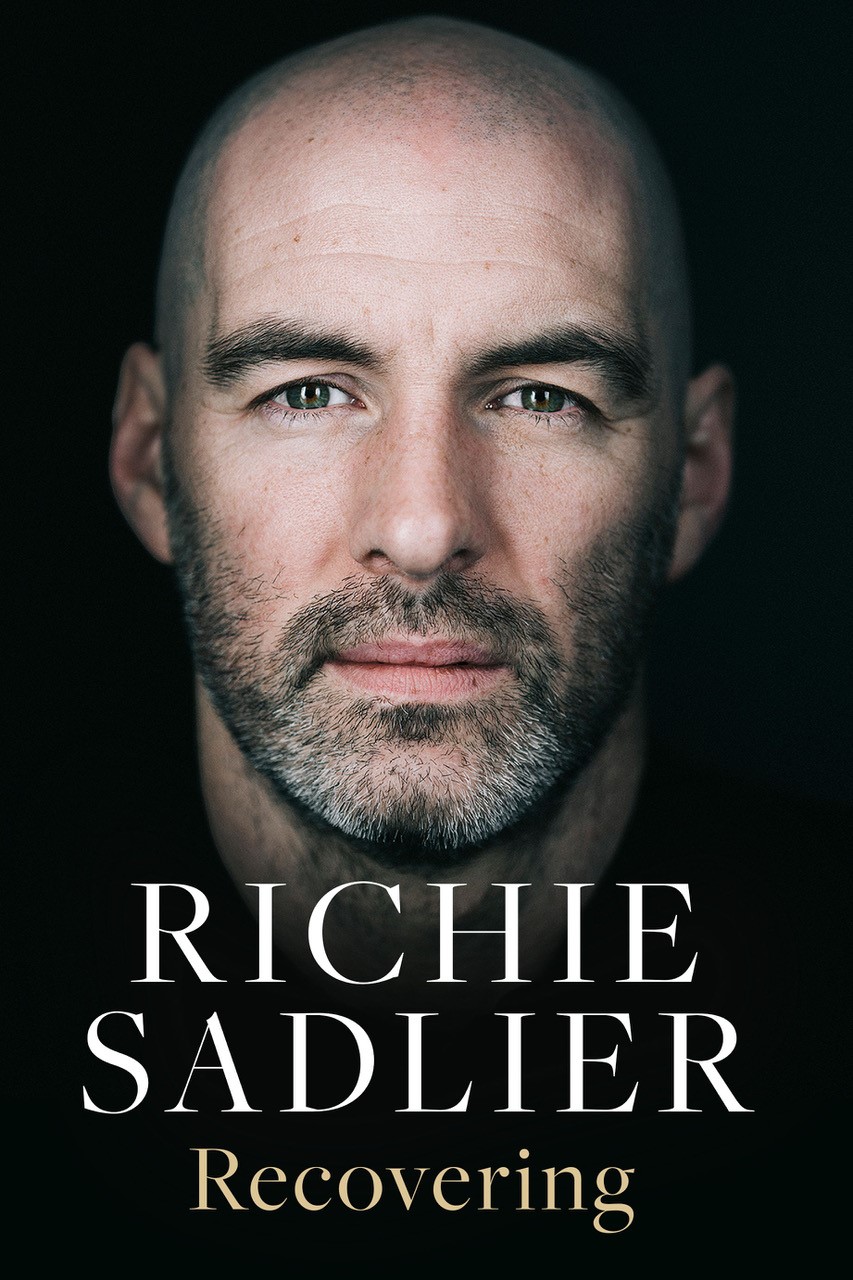
This is an important book. For parents of children who may want them to pursue a career in this game, it serves as a warning as to what it can entail. For parents of all boys, it could also serve as somewhat of a red flag as it deals with issues such as sexuality and broader issues around masculinity among young men. It charts a successful sporting career cut short by injury, which in and of itself is a story worth hearing. It then goes into great detail in two distinct ways – first there is the spiral into alcoholism and heavy recreational drug use, linked to a trauma in his past, then secondly the recovery and journey into two new careers; in media, and as a psychotherapist. And it is this aspect that lends this book a depth, breadth and weight that is practically non-existent in works of this genre.
My overwhelming reaction on completing this was to thank Richie Sadlier. To thank him for sharing his experiences, positive and negative; for exposing some of the darker, more nasty sides of the game; for explaining addiction in such illuminating and constructive terms; for allowing abuse victims to speak up; for giving me and all of my male friends a different perspective on issues like sexual consent, one which we can pass on to our sons; and more generally, away from the book itself, for raising the tone of sports coverage across the various platforms and for avoiding the easy path in his media work.
You all know by now how well received and highly commended this book is, so I won’t repeat the reviews you’ve already read. I wanted to take my time in reading this book and then take my time in thinking how to write about it (not this bloody long admittedly but this is a part-time gig here after all) so this piece is relatively late to the party. Away from the major headline issues around abuse and addiction, which are handled exceptionally well by giving true insight, there are a few other aspects of the book, however, that I would like to mention particularly.
First, his detailed description of the manner in which his body was unable to support his chosen career is one which gives an excellent insight into the crippling mental and physical anguish that must accompany an early retirement. It got to the point where he didnt even trust it when he was in pain “I ignored my body telling me it wasn’t ready. It had let me down so often. Why listen to it now?”.
Throughout the early part of the book, you get a complete sense of the struggles; how he always seemed to take that bit longer to come back; how there was always another niggle around the corner; and – maybe because we read now with full knowledge – the sense that the eventual succumbing to injury was inevitable.
In relation to managers, there are two extracts which really stood out for me. Sadlier’s description of working with Brian Kerr and Noel O’Reilly was quite illustrative and could serve as another stick to beat the Irish football establishment with, as their wisdom remains ignored, sadly permanently in the case of the late O’Reilly. It’s rare you hear the following said about coaches or managers:
“Noel had a way of making you feel this was the best place in the world to be; they both came from the world of Dublin football, but they weren’t insular; they were worldly and open. Noel had a magic about him”.
When describing a stunt they pulled on other teams in Iceland, “it also underlined something else that made Brian and Noel special: there’s nowhere else like this lads, there’s nobody doing things the way we’re doing things”.
And on Brian Kerr himself, “Brian simply knew everything… he knows all there is to know about every team but when you broke it down to individual players, he knew everything about them too.” As Sadlier alludes to, we all now know this about Brian only too well. But what a fantastic tribute to the two of them; their work ethic; their character; and their commitment to succeed with joy.
The second managerial extract is of an entirely different nature. It is about the Sunderland manager who replaced Mick McCarthy, Kevin Ball. “One day, he tackled me a little too enthusiastically and I ended up requiring surgery on my right ankle as a result”. I’m sorry but I needed a double take on that one. The fucking manager put a player in hospital! A player who was in the midst of a comeback into the game having retired from injury? Proper football men indeed. Maybe I’m wrong, and I know some managers like to get involved, but I found that remarkable. I know this wasn’t the issue that caused the final retirement, but jaysus you’d have to wonder about that one all the same.
The final aspect of the book I would like to deal with is Richie’s relationship with his father. As many of you know, Richie does long-form interviews called the Player’s Chair as part of the Second Captains podcast. They go into great detail and depth and are highly illustrative of sporting careers. His interview with Paul Kimmage stopped me in my tracks and nearly caused me to pull over in the car somewhere outside Nenagh. Kimmage was talking about his late father and how much he supported his career and influenced him. There is a very long silence in the broadcast as Paul obviously struggles with his emotions. Only in writing this piece, do I actually begin to appreciate how challenging that might have been for Sadlier as well, with the memory of his Dad’s reaction of not wishing to go to Japan and Korea to potentially watch his son play for his country in the World Cup:
“Dad, this is the fucking World Cup. I could be playing in the World Cup. I want you to watch me if I do. I NEED you to watch me if I do. Why can’t you see that?”
Sadlier’s need to prove himself to his father is a thread running through this book. In contrast to the apathy displayed in the run-up to Japan-Korea, however, is his father’s reaction to Richie’s retirement, when he texted “I’m sure you’ll make a success of whatever you decide to do next. You should be very proud of yourself”. These are complex relationships, and Sadlier sets out his with his father extremely honestly and in a very relatable manner. The detailed manner in which he sets out the resolution of this relationship towards the end of the book gives a sense of closure. A happy ending to the truly dominant theme of the book and of Sadlier’s life. Isn’t it the dominant theme of everyone’s life?
Richie Sadlier’s work on television and on Second Captains has elevated him to a central place in Irish sporting culture. His Player’s Chair series is up there with the best sports broadcasting around. His piece for the podcast on the Belfast rape trial was vital and his work on sexual consent with teenagers is groundbreaking in this country. This is a book that could easily have not been written. There was no celebrity cash-in to be had; no one particular story to be told; and probably no massive commercial clamouring for it. As a result, we have instead a piece of work which cuts across several aspects of a life, but somehow cuts quite deeply into each. I don’t know how much credit is due to Dion Fanning for the writing, but to deal with so many aspects of football, sex, relationships, family, abuse, addiction and recovery in such detail in such a manageable length, is truly admirable.
I haven’t read enough of the other contenders to state categorically that this is the sports book of 2019, although others have already concluded so. I have read many titles this year in all genres and none have affected me as much as this. I rarely get through a book in 2 or 3 sittings. I did with this one. It’s simply brilliant and will stand the test of time with great publications of the past. Thanks Richie.
 A Yard of Grass