Listen, it’s always better to be there than not. In amongst the top 16 of the continent, while many larger nations; many nations where football is the undisputed major field sport; and nations with a deeper footballing culture, miss out entirely. We stumbled into this tournament without one decent performance in qualifying – Ireland were not good in Moscow. Richard Dunne was, and we survived an absolute annihilation. We were gifted the woeful Estonia in the play-off who made it even easier by getting a red card in the first leg, in which we strolled to a 4-0 away victory. We paid more attention to the paper planes in the 2nd leg in Lansdowne, as a very mild party unfolded. We were there. For the first time in 10 years, we had qualified. Having been robbed 2 years previously, it was felt we deserved this one. And you never know what might happen over there…
This time the draw was cruel. 3 countries from the FIFA top ten. In any scenario where your best bet is a result against Croatia, you’re fucked. And nothing in the qualifying campaign or the build-up; the squad selection; the friendlies; the interactions with the media, nothing gave us confidence. And we were right. So unlike the previous reviews of Ireland’s performances in major tournaments, I’m just going to put up my holiday snaps from the fortnight in Poland instead. Much better. We were dirt on the field, absolute dirt, but all of us who travelled took back great memories of Poland. And it’s not a case of “win or lose, we’re here for the booze”. There were moments of real anger and real frustration from the terraces. We were, to a man and woman, disgusted with what we saw, or did not see. We saw no cohesion; no effort to get back into a game; no leadership; no guts; no willingness to change from Trappatoni – exemplified by his choice of a first XI that had just conceded 7 goals in 2 games for the last game; and we saw no hope. No hope for the next campaign. Trap was finished as Irish manager by half-time in the Spanish game. That we stumbled on after Poland with him in charge into a disgraceful humiliation at home to the Germans the following Autumn was a dreadful reflection on all involved.
But for those who were there, these may bring back some of the good times. For those who weren’t, maybe they’ll show why we still, to an extent, speak fondly of this trip.
Before packing:
Town Square in Poznan the day before we kicked off:
Before the Croatia game “Muintir na hÉireann, Táimid i nGrá Libh”:
On tram to the ground:
2012 – Ireland in the middle of the bailout:
One of the more memorable flags of the time. Perhaps one with Shane Long mooning her would reflect the more recent footballing relationship between our 2 countries…
Class.
Sopot the night before the Spanish game. Irish team hotel about 200 yards away to the left…
Manolo. Gdansk…
Crackin’ t-shirt
Iker Casillas vs Ireland. Yep. 90 minutes of this…
Gdansk shipyards. Where Polish communism started to truly fall apart. The site now of a great museum dedicated to the struggle across Poland.
Hope in advance of the Spanish onslaught…
That’s my mate Bryan. You might remember this photo from the other side.
Newspaper in Poznan the day I left Poland.
No one went to Poland for a holiday. We went for the football. As such, we were not satisfied just with being there. We had to perform. And we were awful. The dreadful mantra that “we didn’t have the players” grew up based to a great degree on this tournament and on the performances and results from 2010 to 2013 generally. It was bullshit. Absolute bullshit. And we’ve proven that wrong on a few occasions since, admittedly not throughout the whole campaign. Now we can prove it in a tournament.
As I said here, we waited long enough to get back in the big time. The Netherlands, Belgium and Turkey had all pipped us in play-offs to Euros ’96 and 2000, and France ’98. Good Irish teams had fallen at the last fence, particularly in the two previous campaigns. But while Euro ’88 and Italia ’90 saw Irish football earthquakes on the pitch, it was off the pitch events that brought Ireland to the forefront this time around. What happened in Saipan and in the days and weeks afterwards is the stuff of folklore now. It divided the nation like no other sporting story in our history. But it happened, and once closure was obtained, the business of football began. This was a far more satisfying Irish performance perhaps than at USA ’94. We played brilliantly at times and were desperately unfortunate (but not unlucky) to lose out on penalties to a decent, but far from great, Spanish side, in a slightly chaotic match in the end. We did all this while our best player and captain, and arguably the most influential player in Europe stayed in Manchester instead of leading his country. Perhaps that’s why some of us have such warmth towards that team – that through all that upheaval and upset, they galvanised themselves and delivered some great moments, gave us some great memories as well, and were left kicking themselves not to have emulated the heroes of Italia ’90 by getting to the last 8.
Qualification
For us to get to Japan and Korea, we would have to get past either Portugal or The Netherlands – no mean feat. We would not only get between them, but we would emerge unbeaten and on a memorable September day, we beat the Dutch in Lansdowne Road despite going down to 10 men at 0-0. This was no upset. After all we had thrown away a victory in the away game when we went from flying at 2-0 up to hanging on for dear life at 2-2. Roy Keane was notably less happy with that point than Mick McCarthy – an omen of what was to come later. An insane play-off against Iran followed where we took a 2 goal lead to Tehran and managed to hang on to win 2-1 on aggregate in front of 120,000 people. Relief all round. A result obtained also without Roy Keane, this one due to injury. But a play-off victory at long last.
Saipan
Beautiful eh? Certainly it looks slightly more “car park” than “training pitch”, in fairness to Roy, but how could such a peaceful place be the scene of such uproar. Ah ok… It wasn’t just 2002. So you know the story. Roy gave an interview berating preparations. Mick challenged him publicly. Roy fucked off. Roy came back. Something else happened. Someone sent someone home. Steve Staunton couldn’t believe his ears. Bertie (remember that ****) said he’d sort it out. Niall Quinn shook his head. The young lads got upset. The nation went into a collective seizure. Sky Sports moved its entire operation to Triggs’ favourite walk. And eventually we all got on with our lives and the tournament. Seriously there is no point revisiting it now in any great detail. All that’s relevant now is that we had to face Cameroon, Germany and Saudi Arabia without Roy Keane. It could only happen to Ireland, many idiots have since said despite this happening at the same tournament.
June 1st 2002 – Niigata Stadium, Niigata. Ireland 1-1 Cameroon
The nation held its breakfast for this one, rather than its breath. I think it was an 8am kick off Irish time. So the only black stuff being consumed was the burnt edges of the rashers. On the pitch, the pattern of Irish World Cup games from Italia ’90 continued here. Falling behind in the first half, followed by a second half equaliser. This time Patrick Mboma gave Cameroon the lead and Matt Holland popped up with a fairly decent strike from the edge of the box, not long after half-time. As I recall, we probably should have kicked on from there and won the game, but just lacked that little bit extra that was required and perhaps settled for the draw in the end. A solid, but unspectacular start. All that was really asked for given the events of the previous few weeks.
(I seem to also recall something about Cameroon wearing some sort of onesie kit that year! Anyone else?)
Yet again we fall behind, this time to an early header from Miroslav Klose. We were in big trouble here, but played pretty well. We pressed and pressed, once again showing a global giant that we were indeed their peers. There was no luck involved in the late goal either. It was well deserved. McCarthy brought on Niall Quinn to get in amongst the Germans, and it was his flick from a Steve Finnan long ball that invited Robbie Keane onto it. With nothing but pure Robbie instinct, he squeezed it past Oliver Kahn. The country erupted. Total and absolute drama on a par with Genoa! I came to as the final whistle went with grass stains all over my knees having lost it completely and ran around my friend’s back garden screaming my head off for a few minutes. Pure relief. All we needed was to beat the Saudis by 2 clear goals to ensure our passage to the second round.
And who could forget Mick McCarthy’s face as Robbie scored…
June 11th 2002 – International Stadium Yokohama, Yokohama. Ireland 3-0 Saudi Arabia
It probably should have been a lot easier, but as it happened any sort of victory would have done us as Cameroon lost 2-0 to Germany. A decent strike from Robbie, but one an U-12 DDSL keeper would’ve saved; a rare beauty from Gary Breen; and a jammy enough one from Duffer – that the aforementioned schoolboy keeper’s younger brother would’ve saved – wrapped up our second ever win in World Cup tournaments.
It was worth celebrating, and the noon kick-off meant we watched this one with pints that were more respectable than any sneaky early morning ones earlier in the group. A beautiful day in Dublin as well. I watched the game in what was then called the Down Under bar in Stephen’s Green. After full-time we sauntered down Grafton Street and hung around Kehoe’s for many hours in the afternoon sun, before toddling over to Bruxelles and McDaids for the evening. An evening which included a pretty impressive 15-20 a side game of football on Harry Street at some stage and then a Nitelink home at about 2. You just have to love being in a World Cup and doing well.
June 16th 2002 – Suwon World Cup Stadium, Suwon. Ireland 1-1 Spain (Spain win 3-2 on penalties)
I watched this in the front room of a house in Clonsilla, in the back garden of which was, and still is, this recording studio. I was in a band called Mixtwitch at the time and we were recording our 2nd album. Fucking great stuff altogether. How I managed to end up there for this match is beyond me, but we all made sacrifices. So we managed to take enough of a break to witness the entire 2 and half hours of drama, excitement, hope, heartbreak, despair and anger that accompanied this particular tournament exit.
Spain were decent. They may not have scaled the heights that their successors would, but they were completely robbed by the referee in the next round against the co-hosts South Korea. Italy were similarly robbed at the last 16-stage against the same opponents, so you’d have to ask questions of that. The spine of this Spanish side were Casillas, Puyol and Hierro, and Raul and Morientes, and it was no surprise that it was the latter who gave them a lead after 8 minutes. Yet again, we were behind and yet again we would have to dig deep, very very deep, to salvage an equaliser.
We played great however. Damien Duff tormented them. We were given a great chance when he was – without any doubt whatsoever 😉 – unceremoniously upended in the box for a penalty. Up stepped Ian Harte, and if you think it’s bad to miss a penalty, his blunder was somewhat overlooked after Kevin Kilbane made a dog’s dinner of the rebound! We would get another chance in the dying seconds when Hierro tried to take Niall Quinn’s jersey off. Robbie Keane had a go this time and, as usual, slotted home. A reprieve. A well-deserved reprieve. This team really had something more when required.
In extra time, however, we truly had something more – an extra man – as the Spanish had used up all their subs when Albelda went off injured. For some reason this advantage did not trickle down to the management team and possible even the players. In the cauldron of a World Cup last 16 match, this may be understandable, but not excusable. We should have really gone after them, rather than just be the better team. They were there for the taking had we really committed. The half-hour passed, and on we went to penalties.
Matt Holland, Kevin Kilbane and David Connolly all missed. Juanfran and Valeron also missed for Spain. Mendietta’s kick was to win it. And it just squeaked past Shay Given’s left foot as he dived to his right. Spain were through.
So that was that. Again we emerged from our group.That made us part of the top 16 in 3 of the previous 4 World Cups. We don’t tend to look back on McCarthy’s era with as much fondness as Charlton’s. It was less successful – mainly due to having so little luck in comparison, but we played good football; we had great results; and we had a solid tournament despite losing our captain and best player – the best player in the English League and one of the very best in Europe. The upheaval within the squad in advance of the World Cup cannot be overestimated. It is a testament to the senior players in particular that we did what we did here – regardless of where you stand on the Roy Keane episode.
The inquiries and investigations led to the Genesis report. Has anything changed? Really changed? Has the last week, and some of the stuff said by O’Neill and one Roy Keane, in the Irish camp shown we’re still a bit all over the gaff in this respect? The shambolic last 12 months of Trappatoni’s reign, including his disgraceful treatment of some players and his disdain even for the talents of those he selected; the FIFA €5m nonsense; John Delaney’s schoolboy antics in pubs and town squares across the Continent; the fact that Denis O’Brien is involved; the way in which a team can pull out of our national league while the blazers were having the craic in Poland 4 years ago; and last week how Athlone could not field a side while we were preparing for France? Not to mention the treatment of Brian Kerr and the subsequent appointment of Steve Staunton. Or John Delaney’s salary. The FAI have presided over a fairly regular litany of shambolic episodes since Saipan, but it stumbles on and on. A tournament every so often seems to placate the masses.
But we deserve something more. We deserve to see our team put it up to the likes of Germany and Spain every time. We did just that in qualifying for EURO 2016. Now let’s do it over there.
Jaysus, it starts in 2 days and I’m only on USA 94. This was a strange tournament for Ireland looking back. It most certainly featured our best ever result on a big stage; beating eventual finalists Italy 1-0 in the opening game, but then we kinda limped out of the group and left America with a whimper. There was some degree of gruff hubris on the part of Jack Charlton in not bothering to attend some of the pre-tournament workshops, where minor details like when the players could get water would be discussed – not that big a deal for us northern Europeans playing 90 minutes in Florida in June, but apart from that we went into the tournament as dark horses – not to get out of the group, but to go on and win the bloody thing, having beaten both the Dutch and the Germans away in the build-up, while we were sitting in the top 10 of the FIFA rankings.
Qualification
We qualified by the skin of our teeth, getting between Spain and European Champions Denmark. This achievement has always been overlooked particularly when compared to the 2002 World Cup qualification. Perhaps had a more glamorous team than Denmark been the ‘best in Europe’ at the time and we had done them, it would have been more celebrated today. Coupled with the dreadful atmosphere on the final night in Belfast, perhaps we often forget that our campaign to get there was fairly impressive, losing only once at home to Spain, Charlton’s first competitive home defeat.
June 18th 1994 – Giants Stadium, New Jersey. Ireland 1-0 Italy
Revenge for Rome. Ray Houghton etches his name even deeper into Irish football folklore. What a great goal and what a performance from Ireland. We were never overly worried and could have even added another when John Sheridan hit the crossbar. I remember this game for 3 other things however. One, Paul McGrath owning Roberto Baggio, and anyone else who dared challenge. Two, it was the first time in my life I experienced uncontrollable shakes, as the clock passed 90 and into injury time. And three, we won with Tommy Coyne starting up front on his own – a Motherwell player against Costacurta, Maldini, Baresi et al. It was a phenomenal start and proved that the performance 4 years previously was no flash in the pan and this result itself was no upset. The traditional elite were our peers now, and we were beating them.
June 24th 1994 – Citrus Bowl, Orlando. Ireland 1-2 Mexico
An all-round disaster, remembered primarily for John Aldridge’s mickey fit on the sideline, followed by his goal, the importance of which only became apparent a few days later. We were terrible, fried in the heat of a midday game in near tropical conditions. Dehydrated before it even kicked off, we were not prepared for this. 2 from Luis Garcia put the Mexicans clear, the second included that rarest of footballing events – a Denis Irwin mistake. Aldo’s 83rd minute goal, in normal circumstances, would almost always lead to a fightback from this team, but in those conditions it was well beyond them. A major bump in the road.
June 28th 1994 – Giants Stadium, New Jersey. Ireland 0-0 Norway
So we went into this final game with all 4 teams on 3 points with a win and a defeat each. We were ahead of Norway on goals scored so all we needed was a draw. I watched this one in the Olympia or the Gaiety theatre on the big screen with my sister, her fella (future brother-in-law) and all their work mates. I remember nothing of the match. I was underage so it wasn’t the booze. It was just an awful, awful game of football. Any memories you may have, you’re welcome to share. We got out of the group. But if we’re to be honest, our tournament had long since peaked. The elation of Palermo 4 years ago was nowhere to be seen. All teams were level on 4 points, but John Aldridge’s goal in Orlando, seemingly consolatory at the time, was the pivotal moment in deciding the group in our favour. We finished runners-up.
July 4th 1994 – Citrus Bowl, Orlando. Ireland 0-2 The Netherlands
2 mistakes. One a ludicrous Terry Phelan back header that led to the first Dutch goal, but the second by Packie Bonner in letting Wim Jonk’s weak shot through his hands was probably the worst of his distinguished career. It has been largely forgotten that the Dutchman strolled right through the Irish midfield without a care in the world before shooting. That was it then. Paul McGrath had a goal disallowed at the death but we were outplayed by a decent Dutch side. Two finals tournaments out of three then we fell to the Dutch, and we would have to wait a while, and suffer one further heartbreak at their hands, before getting some degree of revenge.
Despite Jack Charlton staying on for the Euro 96 campaign, ended by the Netherlands again, this time in a play-off at Anfield, I think USA 94 was the true end of his era. New blood was coming through, players were retiring, but above all else, the game itself was changing rapidly. Charlton was becoming a relic. The sort of nonsense he got away with due to his being gifted a phenomenal group of players, by any country’s standards, would not do anymore. Harry Ramsden’s Challenge led to an embarassment at home to Austria in the next campaign. We were also stuffed 3-0 away to Portugal and drew 0-0 away to Liechtenstein – unthinkable performances in previous campaigns. We finished above Northern Ireland by virtue of our head-to head and Charlton’s newest challenge in an expanding Europe came by having to play-off for a place at the Euros despite finishing second. We failed and would fail again at the next 3 attempts.
USA 94 seemed routine. Missing out on Euro 92 seemed to be an unfortunate blip due to getting a very tough draw; some degree of complacency; and a late Gary Lineker goal in Poland in the last game. But one epic result in the opening game of the World Cup could not mask the fact that this was a team in decline. The new blood, with Roy Keane emerging as one of Europe’s greatest players of the 1990’s, would be desperately unlucky not to qualify regularly. They would finally get their reward but we’d all be made wait long enough. And we all remember what happened there…
_________
EURO 2016 – 2 days to go… 5 until we kick off…Get in the mood
Where do you start? As significant a month as there ever was in this country. In any sphere. When Jack Charlton, Packie Bonner and David O’Leary were added not only to the list that included Eamonn Coghlan, Ronnie Delaney and Christy O’Connor Jr., but the other one, the one that included Ulysses, The Joshua Tree and Oscar Wilde. This was beyond football. This was a sporting and cultural earthquake, and one that many out there regard as the nascent stirrings of the Celtic Tiger. We had arrived. Ireland – the country, not just the football team – had arrived.
The indescribable communal mania that gripped the nation for that summer is still felt. We still look back on it as the time when Ireland went from the odd cheeky grin, the nod and the wink, to a full-throated belly laugh and unapologetically threw off the shackles of a downtrodden history. The country, simply put, went absolutely fucking mental. For soccer. Men and women who had never seen a match in their lives were glued to their tellies. Men and women who would spit the word “soccer” before now were inviting over the neighbours for the matches. Whopping loans were taken out with the Credit Unions across the land. Work, school, everything stopped for each match. How do you think O’Connell Street will look when we kick off against Sweden this month? Quieter than normal absolutely. But will it be literally deserted? And I mean not one single soul, no cars, buses or bicycles on the main street of a city of over 1 million people. That’s how it was. It was magnificent, and I was 12 years old at the time – the perfect age for it. I was there for the two group games in Palermo, and while I was always going to be a football fan, I may not have gone to Poland in 2012, or bought several Ireland season tickets to date, or have tickets for France, if it wasn’t for Italia ’90. It changed everything. So let’s roll back the years and remember how it all happened.
Qualification
A bit of a stroll. 2nd place would do. We started off with a string of away games, drawing with Northern Ireland and Hungary and losing to Spain. With 4 home matches in a row, things turned radically in our favour as, first, Spain were beaten, before Malta, Hungary, and Northern Ireland were all brushed aside easily enough in the Lansdowne daylight in those days before the floodlights. All we needed then was an away draw with Malta in the last game. There was never even a question of an upset and we emerged 2-0 winners.
(All images in this post are from YoG’s personal collection of programmes and press cuttings)
Our reward was a trip to Sardinia and Sicily with England, The Netherlands and Egypt.
June 11th 1990 – Stadio Sant’Elia, Cagliari. Ireland 1-1 England
Euro ’88 was our baptism in major tournaments. A superior beast of a tournament in the footballing sense with no bad teams and few bad games. As soon as this one began, however – in the final build-up – we knew it was different. This was the World Cup, the greatest stage in sport. And Ireland was there. The Tricolour and Amhrán na bhFiann. For so long we had looked in from the outside as our closest rivals contested it; when our opponents that night won it in 1966; then their neighbours to the north, Scotland could not stop qualifying; and then as our nearest neighbours to the north qualified and made their own great memories in 1982 and ’86. When the hell was our turn going to come? So this was already different to Germany. Euro 88 showed them what we could do. It also showed the Irish public what Irish football could do, but now we had our chance to actually do it. And we bloody well did.
As I said here, this was no bad English side. Managed by the great Bobby Robson, they inexplicably drew a blank in Germany, but would return from Italy with their best performance at a major tournament since 1966. This was a close match. Massive thunderstorms lit up the stadium as the drowned fans kept the singing going. England took the lead through a messy Gary Lineker opener, and Ireland pushed for the equaliser; a good finish from Kevin Sheedy, but the build-up was ugly. A hoof from Bonner fell to Sheedy who played it forward straight to Steve McMahon, who rather politely gave it straight back, at which point Sheedy buried it from the edge of the box. A solid enough start all the same.
June 17th 1990 – Stadio La Favorita, Palermo. Ireland 0-0 Egypt
The England game wasn’t great, but this was a disaster. I think Steve Staunton had a long-range effort go close at some point but I choose not to remember the football. I do remember the occasion. We were staying in Sliema, Malta for the week and taking the Catamaran over for the 2 matches, there and back in the one day/night. I remember playing in a 20-a-side football match on the dock in Valletta at 5am, thinking I was Roberto feckin’ Baggio dribbling around all these adults and scoring a goal, blissfully unaware that they had all just arrived from the nightclub rather than their hotels. Drink had certainly been taken. I remember the queues for the jacks on the boat; the stench of vomit; and the horror stories of the 8 hour trip from Sardinia down to Sicily; the “I survived the Catamaran” t-shirts. Y’see catamarans are not made for drinking or being drunk, let alone the killer hangover kicking in to the poor lads as we crashed into every wave. The queue through immigration at Sicily was met with an hour or so of farmyard animal noises. Then a bus trip. We scoffed at the massive security presence; the outriders accompanying us all the way across the island; the sheer number of police. Do they not know we’re not English? But we got it wrong. This was to protect us. From the Mafia! Jaysus. At the rest stop along the way, we were informed not to walk away from the cafe or the bus in any direction. Grand so…
Palermo was a bit of a dive as far as I can remember, with little in the way of attractions. A town square somewhere and terrible restaurant service. It must have been really bad if a 12-year old kid at the World Cup remembers! But of course we made the most of it. We sang, we hung around the main square and we made our way to the match expecting a win. We didn’t get one. We were crap. Dunphy was right. How a team with those players failed to break down Egypt is beyond me. But then again, neither did the European Champions a few days earlier. We struggled on, enjoying the phenomenal hospitality offered by the Maltese. I must go back one of these days. Several thousand have since returned for holidays and Ireland internationals.
June 21st 1990 – Stadio La Favorita, Palermo. Ireland 1-1 The Netherlands
This day is when the real mania started. This may have been only the 2nd time that grown Irish men cried openly and publicly because of football – the first being Stuttgart two years previously. We never take the easy option and if a Scotsman had played a key role in Euro ’88, we have a much-maligned English centre-half to thank for this one. Mark Wright, a very good centre-half made hopeless by Liverpool in subsequent years, popped up with a header to put England 1 up against Egypt in the other group game, meaning all ourselves and the Dutch needed was a point each. As such, a complete lottery draw to decide the group in its entirety could be avoided and would only be done to separate the Irish and the Dutch. The only problem was that Ireland were 1-0 down and heading home as one of the lesser 3rd place teams across all groups with only 2 points.
Then – again – Packie popped up with a long hoof. Van Aerle attempted a dangerous back-pass to Van Breukelen, who spilled it towards the on-rushing Niall Quinn, and he slid in to score. We were behind the goal and the place went apeshit. Absolutely apeshit.
Another truly unforgettable moment in Irish football history. We made our way back to our coaches, completely drained, and drove through the night into the early hours to the ferry terminal. I don’t think we knew who we were playing in the next round until the following day. It’s not like your mate could text you, or you could watch it live on a pocket sized device. But it was Romania. The Dutch got Germany. That’ll do.
June 25th 1990 – Stadio Luigi Ferraris, Genoa. Ireland 0-0 Romania. Ireland win 5-4 on penalties
This was when the mania peaked. The day the country reached absolute and total pandemonium. When millions of Irish men, women and children streamed out of their houses, their offices, and their pubs, to simply cry and sing with joy in the glorious Italia ’90 sunshine that shone relentlessly on every city, town, neighbourhood and townland in Ireland that month. Unrestrained, unbridled joy. We were in the quarter-final. We had 2 new national heroes. Packie Bonner had already achieved a level of greatness in Stuttgart in ’88, but David O’Leary was as unlikely a hero as you could imagine. Isolated from Jack Charlton’s squad for years for refusing to travel to a tournament in Iceland, he returned. But to say he would etch his name forever in our national consciousness and that it would be his run-up to the penalty spot that would accompany George Hamilton’s most famous quote – “A Nation Holds it’s Breath” would have been regarded as total fantasy. But so it went. And nothing sums up the national euphoria that day better than this scene in “The Van”…
It was another dour enough game however, the dullness pierced only by a few Gheorghe Hagi belters from the edge of the box and a handful of Irish half-chances. The game limped through extra-time and into penalties. Simply put, we both scored all of our first 4, Timofte missed their last one and then a formerly exiled centre half stepped up and made history. I lay on the floor on my knees with my head in my hands and did not see O’Leary score. But I was on my feet straight away. And my Mam got me out into the car to drive around the place beepin’ the horn. As you did. Which was grand until we got to the pub and the car started getting absolutely battered (all in good humour obviously). It wasn’t a very imposing sort of vehicle, so we went home and probably just watched the whole thing again, waiting for the rest of the family to get home. Meanwhile elsewhere in South Dublin…
Ah jaysus… It was a different country then. It really was. But a Quarter-Final in our first ever World Cup awaited. And just to add spice to that, it was against host nation Italy. It was another magnificent occasion.
June 30th 1990 – Stadio Olimpico, Rome. Ireland 0-1 Italy
Schillaci simply broke our hearts that evening. A fast breakaway goal caught us on the hop and Packie’s slip was pure bad luck. We had our moments too, but ultimately beating the hosts in the Quarter Final was too much even for this blessed group of players (literally for this game, having met the Pope a few days beforehand). So we welcomed them home. As heroes.
Ireland have played in 3 tournaments since Italia ’90. Despite getting out of both World Cup groups in ’94 and ’02 with no little drama and heroism, nothing has captured the Irish public’s imagination again like that summer 26 years ago. And possibly nothing ever will. You never forget your first time. Italia ’90 is widely regarded as the worst ever World Cup. It was turgid stuff perfectly exemplified by a terrible final. The rules of football were changed in its wake – with the back-pass eradicated and several changes to the offside rule since. In this part of the world, however – both Ireland and England – it became the stuff of mythology. We have all of the Irish heroics described above for us; and there was Gazza’s tears and their historically good performance for the English. All played out to the wonderful soundtrack of “Nessun Dorma” sung by Luciano Pavarotti. Epic performances set in an epic country to an epic soundtrack. To have lived through this month was a privilege; to do so as a 12 year old obsessive football fan even more so; and to have been behind the goal when Niall Quinn scored was an experience beyond words.
In the decades since, we have fallen in and out of love several times with the Boys in Green and the whole set-up – McCarthy’s near misses; Saipan; Kerr’s disappointing and unfair dismissal; John Delaney’s endless antics; the Steve Staunton era; Paris; and Trappatoni’s rapid descent have all pockmarked some great performances and decent periods.
But this group we have now is different to many of the previous ones. I think the people love this team almost as much as the class of 1990. Despite some of the results and performances, the campaign to get to Euro 2016 was brilliant – drama in almost every bloody match – late winners, late equalisers, one thoroughly magnificent home victory and a solid play-off win. So maybe, just maybe, when Shane Long bursts the net in Paris next week, we can well and truly relight that joyous Italia ’90 fire that raged across the country that month.
It’s up to us…
For now, a few more images to remember the Italia ’90 campaign including yours truly circled in blue on the cover of the Sunday Tribune from the Egypt game (honestly).
Right, forget about the English Premiership; the tiresome nonsense around Mourinho; Leicester’s miracles; Spurs’ calamitous end of season; even forget about Saturday’s Champions League Final. Now is the time to get yourself in the mood for what has always been the ultimate feast of football – the Euros; the European Championships; the European Nations Cup! Of course the best way to get yourself in the mood for football is to go to some more football, so once we’ve waved the lads off from Dublin and Cork this week, have a look here and consider heading along to some local games. But even as the league here heads towards its halfway point and mid-season break, we look forward to France by looking back at the national team’s performances in the 5 major tournaments we have graced in our noble football history! Starting where it all began. Euro 88.
Strangely enough in these days of tightly fixed cross-continental TV scheduling, we had finished our campaign a month before qualifying with a 2-0 win over Bulgaria on October 14th 1987, in front of just 26,000 fans at Lansdowne Road (people seem to have forgotten that it wasn’t all sunshine and lollipops as soon as Big Jack entered the fray). We had no hope of qualifying. We were 1 point ahead of Bulgaria and had inferior goal difference. They would play their last match at home to Scotland on November 11th, who had nothing to play for. And while RTE showed it live, no one really expected anything from it.We had no chance.
Then the most famous Scottish international in Irish football history, Gary Mackay, popped up with a late winner to keep us top. While there were celebrations within the Irish football community, no one – not a single person, and don’t let them tell you any different – could have possibly anticipated that this country would, within a few short months, come to a complete and utter standstill for a few Irish football internationals. No one had any idea of the absolute pandemonium that Jack’s Army would inspire among the Irish people over the coming years, or that a gargantuan, magnificent, monster had been born on a desperate wet night in Sofia. Qualifying for Euro 88 was the last thing any Irish football team would do even remotely under the radar. The Boys in Green have been front page news ever since. And as you read through this, you’ll remember why. Like you need reminding.
June 12th 1988 – Neckar Stadion, Stuttgart. Ireland 1-0 England
“Mis-kick by Sansom. In goes Aldridge. and HOUGHTON!!!! 1-0!!!”. The first in the near-anthology of George Hamilton Irish commentary moments. Honestly I didn’t google that. You don’t have to google information that is hardwired into your brain aged 10. George Hamilton quotes are like the knowledge required to propel your bicycle forwards. Or tie your shoelaces.
Legend has it that from 6 minutes past 2 local time until sometime close to quarter to 4, the Irish goal was bombarded by wave after wave of English attack. This was not actually the case. While Packie Bonner and Gary Lineker may have had their own little private practice session, whereby the Englishman would blast balls from 5 yards out straight at the Donegal giant, there were moments of danger at their end too, most notably when Ronnie Whelan hit their crossbar. Overall, though, it was a bit of a struggle and a toil to the end for Ireland, but we had arrived. And we had beaten England. A truly phenomenal start to the campaign.
June 15th 1988 – Niedersachsenstadion, Hanover. Ireland 1-1 USSR
This one featured heavily in my earlier profile of Tony Galvin. That night he gave one of the greatest individual performances in an Irish jersey in my lifetime, up there with Paul McGrath in Giants Stadium and Richard Dunne in Moscow. Ireland absolutely tore the Soviet Union to pieces. Ronnie Whelan scored one of our most famous goals and Galvin completely ripped their defence asunder. If England’s dominance in the first game has been exaggerated somewhat, it was simply not possible to do so about Ireland’s performance in the second. At 1-0 up, Galvin was unceremoniously upended in the box. A nailed on penalty inexplicably not given. Raid after raid brought more chances for Aldridge and Stapleton.
Then these Soviets; these footballing technocrats; these wonderful athletes steeped in a magnificent footballing culture over decades, hoofed it. As the ball sailed over the Irish defence, Oleg Protasov latched onto it and George Hamilton coined a phrase that has defined Irish footballing panic for two generations – “Danger Here!”. Through Packie’s legs for 1-1. But if the result against the English signalled our arrival, the performance against the Soviets signalled our intent to stay around a little longer than many expected.
June 18th 1988 – Parkstadion, Gelsenkirchen. Ireland 0-1 Netherlands
We were fucking robbed! Not the most memorable game or most memorable performance. With the exception of Paul McGrath’s header, we created little. The Dutch needed to win and we only needed a draw. They were the better side but the goal was so difficult to accept that I’m sure there’s a few out there still having nightmares about it. It came from a headed clearance hammered awkwardly into the ground by Ronald Koeman and going a mile wide. Wim Kieft then got a glancing header to it, and as it bounced about 5 yards out from the goal, it was travelling a good yard or two wide. Then it changed direction completely. Bonner had no chance. Replays show that – according to the rules of the day – Marco Van Basten was several yards offside when Koeman hit his shot. Robbed! Players fell to the ground with exhaustion. 8 minutes to rescue the draw needed to get to the semi-finals. We were done.
(very strange video below. Including a Mr. Boner in goal)
And that was that. Ireland ascended into a true European elite that summer. Only 8 teams made it to the finals. Germany, Italy, Spain, Denmark, The Netherlands, Soviet Union, England and Ireland. No Portugal, France, Yugoslavia or Belgium, the latter having been well beaten into 3rd place by Ireland in qualifying. Next month 24 teams will compete and we only had to finish 3rd to get there via a play-off. In 1988 we had to win the group and to contend with the previous World Cup’s semi-finalists – Belgium – beaten only by Diego Maradona in that instance. Getting there was a massive achievement in itself.
To go there and to beat that English side – themselves also only victims of Maradona’s genius and cunning in the previous tournament – was extraordinary. To so powerfully dominate one of Europe’s footballing giants in the Soviet Union was a clear statement that this is not a team of novices – this team, this country, should have been here a few times already. Then to lose by a bounce of a ball to the eventual winners and Hollands only successful team to this day, was deeply unfortunate. As was said at the time, we won a game we should have lost; drew a game we should have won; and lost a game we should have drawn. So it ended about right. Knocked out by the two eventual finalists. And we did all of this without Liam Brady – our best player arguably – who was suspended for two matches after a red card against Bulgaria in qualifying and was left at home. So we bowed out at the group stages but bowed out with our heads held high.
The best was yet to come in Italy. Euro 88 has often been overlooked, overshadowed by the mania that gripped the nation 2 years later. Everyone remembers Houghton’s goal, but many may have forgotten or may tend to neglect Galvin’s superman performance; the closeness of the outcome; and the fact that jaysus, if the linesman had got it right, we’d have been in the semi-finals at our first attempt and then anything could have happened. Irish people click when “Italia 90” is mentioned. Not so much “Germany 88”. It was a phenomenal few weeks, and by the time the World Cup came into our horizons, football, for so long the poor relation of Irish field sports culture, particularly outside the cities, was front and centre. We’ll talk about that next time…
For now, say thank you to youtube and take a look at the clip below. It’s just fantastic. Everything, absolutely everything, about this screams 1980’s Ireland. I never knew that Chris Morris looked so much like a member of a New Romantic band, or that Frank Stapleton looked so much like one of the lads in the crowd at a New Romantic gig… gold…
Law and order broke down in Hampden Park early on Saturday afternoon. In footballing terms, Hibs broke a century old hoodoo and turned the law and order of Scottish football on its head, by winning their first Cup since 1902, while the pandemonium that followed the late, late, winner from David Gray, was a completely unacceptable display of disorder. A mass pitch invasion; Rangers players assaulted; goalposts destroyed; fights on the pitch between opposing fans and finally that oddly warming nostalgic scene of British police on horseback striding across the green surface. Brings me back to my childhood. But no. That was not right by any means.
I’ve never understood pitch invasions though. Every summer I cringe as I watch GAA fans leg it onto the playing surface and then stand around like small-town teenagers outside the Spar not knowing what to do when they get there. Nonsense, but at least in the native games it rarely gets that violent. The gobshitery that spills over onto the pitches of the League here is small in number and is very, very silly. I view the pitch in the same way as Billy Connolly views the sea – We don’t belong there. If we did we’d be wearing fucking shinguards and boots to the games, not coats and scarfs. Some of you will disagree, but I respect the playing surface. I’m not a fan of pitch invasions.
I am a fan of a good song, however. And great, great football songs. As a Liverpool fan, “You’ll Never Walk Alone” has had me in tears at times – a song that is part of the club’s very soul, especially since April 1989, given even greater meaning in recent weeks. An anthem like few others.
But this post, based on one I did a few years back for Screw Music, is about a Proclaimers song called “Sunshine on Leith”. It’s the anthem of Hibernian FC of Edinburgh. And after all the madness inside Hampden had calmed down on Saturday, they gave a spine-tingling rendition of it. It’s great to know that in a weekend where hype, bullshit and fully orchestrated near-sabotage brought an odious prick like Jose Mourinho back into the sordid world of the “Greatest League on Earth”, a group of football fans up the road can remind you of the power of the collective. It was also heartening to see so many of the players knowing all the words as well. I’m not for one second suggesting Scottish football is a squeaky-clean antidote to the English version, but there’s something fantastic about this. A 114 year wait ended. Promotion be damned, even for a club of Hibs’ stature. It can wait til next year. In a world where 4th place trumps the FA Cup, it’s fantastic to see how much this means to those fans. There’s no way Saturday will be remembered by most for these couple of minutes, but maybe for a few like yourself it will.
It’s a bit special. And the very, very best of that great country Scotland. Enjoy.
Football is not a television programme. As those who attend League of Ireland matches are often heard to say. It’s not something you play as a kid and then head to the couch or pub for the rest of your life to experience. And you don’t need to deposit hundreds of pounds into Michael O’Leary’s bank account and the British Exchequer to experience it either. But let’s make something clear – there is no such thing as a “League of Ireland” fan. Just a football fan. From or with a connection to Ireland. The fact that he or she chooses – often in addition to the couch and pub arenas – to travel up the road, to the next county or cross-country to attend football is not something noteworthy. It’s normal. Or at least it is everywhere else and could be here. “Are you an English Premier League fan?”. Sounds daft, doesn’t it. So let’s drop that ludicrous term as well, shall we…we’re all football fans.
This series of posts aims at highlighting the magnificent experiences that people have had attending football matches in Ireland, mainly club matches. We far too often see the hype generated by the English game, and although less so in recent years, the Scottish game, and see our own as vastly inferior. It is. To the former. The latter debatable give or take 2 clubs. We also hear endless paeans to the wonder of the native games and all they have to offer in terms of atmosphere and (that word again) experience. And they’d be right. At least a dozen times a year anyway. But we hear little about the club football games. The legendary days and nights. Title deciders. Cup finals. But above all else, in my view at least, the days and nights where our League of Ireland boys put it up to the Contintentals. And won. Or almost won.
And we begin with a match a 13-year old me watched with his jaw on the floor, in which German über-giants Bayern Munich came to Cork. Played on a weekday afternoon – I must’ve been mitchin’, we’d no half days on Wednesday – in Musgrave Park rugby ground, it may still be the greatest result ever by an Irish club. My own memory sees Dave Barry scoring a 30-yard screamer to give City the lead. Youtube doesn’t completely contradict me either. Although it didn’t break the net, it certainly was a great goal. But Bayern, who had a few lads with newly enough minted World Cup winners medals in their lockers – Thomas Berthold, Stefan Effenberg, Brazilian international Mazinho plus a young Christian Ziege, alongside a lot of established Bundesliga regulars, all managed by Jupp Heynckes – fought back to claim a 1-1 draw. With an away goal in the bag they won the 2nd leg 2-0.
But as some of the posts on People’s Republic of Cork show, this match will live long in the memory. And Bayern did well to get a draw, with Dave Barry again going close with a free, while Pat Morley may have got a peno on a better day. As for Stefan Effenberg – remember we “didn’t like” the Germans back then, not like now with the beguiling charm of Jurgen and Didi all over our tellys – it seems he was quite the ballbag saying he would score a goal for every part-timer on the pitch. Well he struggled that day, but got there to equalise in the first half.
While this was not a vintage Bayern side, despite being runners-up and European cup semi-finalists the previous season they’d go on to finish 10th in the league in 1991-92, and exited the UEFA Cup in the next round to Boldklubben 1903 of Denmark (yeh me neither), it still stands as a massive result for Cork City and for Irish Football. There had been similar results in the past, and more were to come. But for that one sunny afternoon, Cork City put it up to one of the biggest names in European football.
Dave Barry himself was of course a great Gaelic footballer as well with a couple of All-Irelands and 4 Munster titles to his name. He managed City for 5 years, which included an FAI Cup win. Today he is to be found as a voice of reason on Soccer Republic and covering live football for RTÉ. Fellow pundit Pat Morley was up front that day, alongside current manager John Caulfield. Noel O’Mahony was the Cork City manager. He died aged 73 in 2013, and was described by the Irish Examiner as the only man to have “created a sporting legend at Páirc Uí Rinn, Turner’s Cross and Musgrave Park.” He played for Cork Hibs at Páirc Uí Rinn, then called Flower Lodge, managed City to the title at Turner’s Cross and masterminded this result in Musgrave Park. A great Irish football man.
In writing this series of posts, I’m not afraid to dig around online to put a story together and perhaps weave back the loose threads of your personal recollections. There are a number of games that will spring readily to mind for readers, but please get in touch with some suggestions with comments below or on the facebook page. Particularly decisive league games – we’ve had a few down-to-the-wire classics in recent years alright, or indeed any under-rated or forgotten great international performances. All I’m interested in is the fact that it was a game of football, played in Ireland, by an Irish team. That you or someone like you, was there. And that it deserves to be thought about and written about just one more time to try and balance out the endless and ubiquitous coverage from foreign football and other sports. It’s about showing the uninitiated that they too can be a part of something like that in the clip above. You can say that “I was there”. And you can discover that incredible atmospheres and great football memories are out there to be found on your doorsteps. Because, as I said, Football is not a television programme.
The Monday after the Friday night before. Bohs battered 4-0 in Dalymount. Goals from Gary McCabe, Gavin Brennan and two from Brandon Miele making it a great night for Rovers. But if you read RTE’s reports on the night, you’d think there was no game at all. “VIDEO: Violence mars derby at Dalymount” screeches the headline, with only 1 line dedicated to the football action. The Irish Times, on the other hand, merely mentioned the incident in passing in their match report. Quite the contrast in how to report on a 90-second event within a 90-minute Dublin derby, from 2 sources that traditionally avoided tabloid hyperbole. Perhaps RTE can no longer resist the clickbait. Someone should tell them they are the State broadcaster, not balls.ie.
While every one of those people that got themselves over the barrier for a bit of a mill on Friday deserves a life ban from all Irish football, let’s not exaggerate the state of the Irish game in this regard, and let’s not allow Sky et al pull the wool over our eyes in relation to English football hooliganism, which seems to have magically resurfaced only since camera-phones became available – just search for any football club name and ‘hooligans’ on youtube – there are videos up even from last weekend – unreported incidents, mainly because they are as minor in nature as Friday’s, also they tend not to occur inside the stadium. Incidents like that in Dalymount happen all over Europe, including England, but outside the grounds and generally beyond the reach of the TV cameras. And require massive, massive, police resources. Those videos would probably make for pretty disturbing watching in places for those who have been reared on Sky Sports’ sanitised version of English football. Those, like me, who remember the 80’s may not be too shocked.
And Friday’s ‘outside the chipper after closing time’ incident was all kicked off by one, then one other, Bohs “fan”. This is not pre-meditated anarchy on a massive scale. I wonder if the relaxed attitude of the Guards on these rare occasions has more to do with how much worse they have to deal with on Friday nights outside pubs and nite-clubs all over the country than any sort of unpreparedness or laissez-faire attitude in general.
Now I look forward to watching Soccer Republic tonight to see how the national broadcaster treats it a few days later, with some football knowledge in the room. Hopefully they will focus on the football and not the minor disturbances. Both clubs have been charged, and Bohs have released a pretty strongly-worded statement on the matter. So yet again, we hope that another half-dozen or so instigators are banned from the grounds. Until the next lot. Rovers definitely have a problem, particularly away from Tallaght. At least this time the blame for kicking it off seems to lie with 2 easily identifiable individuals from within the Bohs ranks, but a few Rovers lads were quick enough off the blocks out of the Des Kelly stand as well. It’s all a bit of a nonsense, but also a bit of a shame.
But the shame is shared by RTE as well, some of whose reporters seem to have an awful appetite for covering these incidents over any on-field matters, or substantive football-related content off-field.
Why does it take an English bloke to truly reflect the Dublin derby? This is brilliant. Apart from the result.
Against Switzerland on Friday, Good Friday, the Republic of Ireland national football team will wear a jersey emblazoned with the above image. It is certainly a uniquely nationalist sentiment being expressed officially by the Football Association of Ireland for my lifetime. The collective angst behind the national question, and its expression in this divided soccer island by the almost unique presence of two teams representing Ireland in the sport, is worth exploring. We know the reasons behind the split; a Belfast bias; political conflict; and the refusal to move a cup game etc. Decades of warming and cooling relations between the FAI and IFA have followed with talk of reunification on a few occasions throughout the 1970’s. But for people of my generation, the football split on this island is defined by that night in November 1993. The vitriolic hatred of the Windsor Park crowd as the Republic struggled to get to USA 94, and the sectarian rabble-rousing of Northern Ireland’s manager Billy Bingham as they led 1-0, has yet to fade. Thoughts of reunification since have been largely left to the academics and the what-if brigade.
Going back to the beginnings, Football first came to Ireland in the 1870’s with the British Army. And unlike Rugby and other sports, its headquarters were in Belfast. David Goldblatt’s monumental tome “The Ball is Round”, first published in 2006, puts this down primarily to geography and Belfast’s accessibility to the west of Scotland, as he calls it a “football hotbed” at the time. The IFA established the Irish Cup in 1881 and a league in 1890, as the Belfast and northern teams dominated. Bohemians were the first Dublin club to reach the final in 1895 where they lost 10-1 to Linfield. Finally, Shels beat Belfast Celtic 2-0 to win it in 1906, in only the 2nd final to be staged in Dublin.
If you can imagine, the footballing backdrop to the early 20th Century in Ireland was already volatile. You had a league run by mainly Protestant administrators in Belfast, with a number of teams in Dublin – Bohs, Shels and Sandymount’s brilliantly named Freebooters FC – challenging their dominance. Meanwhile the GAA was embedding itself into Irish nationalism, as part of the on-going Gaelic cultural revival. In a certain sense, a troika was formed within which every true Gael could wrap himself or herself – Nationalism, the Catholic Church and the GAA. As soon as the GAA was formed, it expanded its remit beyond merely promoting their games by expressly seeking the suppression of British Games, most notably through Rule 27, known as the Ban, and which stated that “Any member of the Association who plays or encourages in any way rugby, football, hockey or any imported game which is calculated to injuriously affect our National Pastimes, is suspended from the Association”. As in you play our games and you play no other, particularly British games. And Football was a British game – the garrison game. When Liam Brady was expelled from St. Aidan’s CBS for playing a sport at which he would go on to become a national and international icon, it was decisions made in the 1880’s that can be thanked.
And it was the GAA and Gaelic Football that thrived in the pre-Rising era, pre-Revolutionary Ireland. By the start of the 20th Century, All-Ireland finals were attracting the same crowds as the FA Cup Final in England as the national games were established as a cornerstone of our culture. And to be fair to the GAA, it should be borne in mind that Football indeed was essentially a British game and in my opinion, at that time it was probably both fair and reasonable for it to be viewed by the Gaelic revivalists as a rival to our own. It wasn’t a world game in the sense it is now. Had the GAA and the Irish Establishment known what nationalist aims and objectives would be met by the “garrison game” across the globe by many nations, old and new, including among England’s most bitter foes throughout the 20th Century, maybe they would have been happy to promote football and beat the Brits at their own game. Maybe that is naive, idealistic revisionist nonsense, but jaysus when else but this year will it be allowed!!!
Beating the Brits at their own game, however, is exactly what Ireland did in 1914, when they won the Home Championship. Captained by Catalan national hero Patrick O’Connell, or Don Patricio as he is known there, where he is regarded as the man who saved Barcelona FC during an era of desperate turmoil in Spain (His is one of Irish Football’s most incredible stories), Ireland beat Wales 2-1 in Wrexham, England 3-0 in Middlesbrough, and drew 1-1 with Scotland in Windsor Park.
Ireland 1914 Home Nations Champions
Then World War I happened. The Irish Cup continued but the league was suspended in 1915, as war efforts trumped almost everything. Ireland would remain champions for some time. Football continued, on a limited basis, in Dublin and Belfast. In The Origins and Development of Football in Ireland by Neal Garnham, it is said that over 20,000 attended games in Belfast. It was almost a boom time as this working-class game gave solace and escape from the war.
As for the GAA during the Great War, the same source relates stories of the Association as late as 1915 staging charity games for wounded servicemen – Irishmen serving in the British Army. They may not have had a firm policy on where to focus its political energies as the Volunteers began to organise, with several hundred GAA members among them, but a British inquiry into the Rising certainly concluded that the GAA was a subversive force within Ireland and central to the rebellion. The GAA strenuously denied this. According to Paul Rouse writing in the Irish Independent, 302 members from 53 clubs were involved from the 1,500 or so rebels. It was a significant contribution but they were far from hand in glove, and certainly not reflective of any official line. Far more members fought in Europe for the King, reflecting the general population as the Association always has. Later in 1916, the GAA even met with General Maxwell to discuss the entertainment tax issue, which could have had a serious adverse effect on sport in Ireland. He was the man put in charge in Easter Week by the British authorities and the man primarily responsible for killing the leaders of the Rising, after whom so many GAA clubs and grounds are now named. That very same organisation would also go on, many years later, to perpetrate the myth that Hill 16 was made from the rubble of the Rising. It was a total fabrication. Hill 60, as it was originally known, was named after a hill in Gallipoli where the Connaught Rangers suffered many casualties fighting for King and Country. Senior figures in the Association just decided to rename it in the 1930’s to distance itself from a British war and thought using the Easter Rising, and all the trappings of the rebellion, was a good idea.
However, no one seems to have asked how many football players were involved in the Rising. Dozens? Hundreds? Any collection of Dubliners, in particular, at that time would have had many footballers among their ranks, but there is seemingly no evidence to hand online (this is a blog not a PhD. Feel free to contact me if you have any info) of Bohs, Rovers or Shels players in the Volunteers or the Irish Citizen Army. The most famous link between our sport and the Rising would have to be Oscar Traynor. Many of you will have played in the Oscar Traynor Cup at some point in your schoolboy football life, named after the former President of the FAI and a Volunteer in the Easter Rising. I think I might’ve won it once with Portmarnock in the 80’s – I’ll check, but for now, Yes I did.
But perhaps the most public link between the Rising and football was from the 1966 FAI Cup Final, which was scheduled for the exact 50th anniversary of the rebellion, rather than Easter weekend – April 24th, in Dalymount. On that occasion, related on Come Here To Me, over 200 Volunteers paraded in front of and saluted fellow rebel, then President Eamon De Valera. The Irish Independent reported that the event “was a historic occasion with the freedom fighters of 1916 taking part beforehand in ceremonies which would have brought joy to the heart of the late president of the FAI, Oscar Traynor.” It was a terrible match in which Shamrock Rovers beat Limerick 2-0. In goal for Rovers that day was my Grandmother’s brother Mick Smyth, a man who was seemingly followed by league titles and FAI Cups wherever he played. I must ask him about that match one day. Raidio Éireann (now RTÉ) did not even bother to broadcast it. We would have to wait almost another 50 years before that particular institution realised we had a domestic game.
1916 Volunteer and FAI President Oscar Traynor
Going back to 1916, we all know what happened after Traynor and the Rising was defeated. The War of Independence, the Treaty and the Civil War all caused untold upheaval in all aspects of Irish life. And the island came out the other side divided. And Irish Football divided with it. To an outsider today, the latter would seem obvious. Why would 2 separate states have one football team? But back then, things were very different in that sense. International football had yet to bed down, with over a decade to go before the first World Cup, and FIFA just over a decade in existence. It was flexible, particularly in the old singular nation-state of Great Britain and Ireland, which had 4 “international” football teams. “Ireland” would still go on to refer to the entire Island. Both associations could pick players from each jurisdiction. And they did. Many players played for both, but the situation could not persist as international football became much more organised and much more important. As perhaps a sign of this increasing relevance, England competed in a World Cup for the first time in 1950.
Around the same time, FIFA decided it had enough of the IFA /FAI confusion, which had facilitated 4 southern players playing for both teams in the 1950 World Cup qualifying campaigns. By today’s standards, that seems ridiculous, but it happened. And in 1953, the name “Ireland” was removed from international football, replaced by the “Republic of Ireland” and “Northern Ireland”. Again, to an outsider, there appears to be nothing illogical. From a Rugby, Cricket, Hockey, Boxing etc. etc. perspective, it copper-fastened a partition that even the Irish Constitution accepted as merely a temporary arrangement. Seen from that perspective, the game of the masses legitimised division. But from another perspective, the Republic of Ireland National Football Team was the only sporting expression of the State, the new Republic, on an international stage. In other aspects of life – particularly economics and the new state enterprises, all that could be done to give expression to the new Republic was done. Could the football team have been regarded similarly? It stood under a tricolour with players who were therefore expressing some degree of loyalty to the Republic, either in its 26 County form, or in its 32 County form “pending re-integration of the national territory” as our own Constitution said up to 1999. They were not playing in and for Belfast but in and for Dublin. And it has been such ever since. Granny rule imports and those born north of the border all stood for Amhrán na bhFiann and there was to be no new accommodating anthems required. Whether you agree or not, in an Irish sporting context, it’s a perspective unique to football.
But as in any sport, it’s the results that really matter. Notwithstanding a good showing in the 1958 World Cup in Sweden where they were quarter-finalists in a 16-team tournament, going further than England or Hungary, success really came to Northern Ireland in the early 80’s and to the Republic from the late 80’s to the mid 90’s – the Charlton era – with several near-misses and heartbreaks under Mick McCarthy. 2 tournaments followed for the Republic in 2002 and 2012 – the former dominated by the absence of Roy Keane, the latter by the absence of the whole lot of them.
Spain 0 – 1 Northern Ireland in Valencia, World Cup 1982
Which brings us all the way up to 2016; 100 years after the seeds were sown in the freedom but eventual division of the Country and 102 years after Ireland beat England 3-0 away to become Home Champions. We look forward to an historic European Championships – the first time that this entire football island will compete in a major tournament. This fact is truly worth drinking in for a while. If you are a southerner, how will you watch Northern Ireland? Do you care? Do you hate their residual sectarianism? Do you regard them as much Brits as Irishmen? Or will you support them? Will you take pleasure if the Boys in the other shade of Green do well? If you’re a nationalist from Northern Ireland whose father and grandfather supported the Northern Irish team in the 1980’s World Cups, will you support them too? Maybe think about it now. Then reflect on those thoughts when they line up in June, particularly if Northern Ireland line up to a new anthem, as has been proposed, by virtue of England potentially dropping God Save the Queen (I have not heard any update on this proposal from January). The scars of November 1993 are still open, and there is certainly zero affection to this day for the “Free State” team in the stands of Windsor Park. But can this summer change things in that direction as well?
Michael O’Neill, manager of Northern Ireland, did more than most to put southern Irish domestic football on the international map. His back-to-back league titles with Shamrock Rovers and that unbelievable European run have yet to be matched 4 full seasons on. And of all the clubs, it was Shamrock Rovers he did it with – a club, some of whose fans were chanting “IRA” throughout a Setanta Cup game against Linfield a few years back, and who ripped up the odd seat in Windsor in the return tie. (As a Rovers fan, I like to think I’m in the better-behaved majority.) A Catholic former minor Gaelic footballer managing that same national team whose fans Billy Bingham whipped into a sectarian frenzy. And of course, the Republic managed by the other M. O’Neill. His father was a founding member of Padraig Pearse’s Kilrea GAA club. A Derryman. Both managers represented Northern Ireland with distinction. Martin captained them in the 1982 World Cup in which they beat the Spanish hosts and the pair have 95 caps between them.
Martin and Michael O’Neill
A
To give a personal view, Yard of Grass is a one-man operation based in Harold’s Cross, Dublin. My background means I have no real interest in nationalism as it has been generally defined for several decades in Ireland. I know my history well enough but know and sing no rebel songs. I do not support Glasgow Celtic. I do not believe doing so is necessarily an “Irish” thing to do, or hating Glasgow Rangers for that matter. I do support Liverpool but also Shamrock Rovers. Like everyone around me in Tallaght that night I had no time for the IRA chants, and am glad they haven’t appeared in Lansdowne for a long time, as far as I’ve heard from the south stand. As a Dub, I have no true grasp of the descent of the Northern Irish football crowd into a sectarian outfit in the 90’s and 00’s. And I fully support James McClean in his stance on the poppy. Some of you will nod and accept the above. Some of you maybe screaming at the screen and preparing comments in your heads. But that’s the heart of the Irish National Football Question.
We grow up, most of us, supporting English teams and/or one Scottish team. We ignore, most of us, the league on our doorstep – y’know the one that Paul McGrath and Wes Hoolahan et al came from. We, most of us, are at least a little bit nationalist, and would see Irish reunification as something that could happen eventually. We like the Northern Irish, particularly Catholics who all support the Republic, but also nice decent Protestants. Ulster rugby fans are ok when it’s 6 nations or RWC time. Graeme McDowell and Alex Higgins too.
But the football team and their fans? This is a different story altogether. Perhaps, like any football crowd, including our own, gobshitery is inevitable, but from the small minority. Efforts to eradicate sectarianism are welcome and are working. Michael O’Neill is to be commended for his stance on trying to create a team for the whole community. And as the nascent “Northern Irish” identity grows – neither Irish nor British – perhaps nationalists will see that team as a viable and moreover desirable option once again. But it’s a long road from Neil Lennon being forced out by sectarianism to Catholic nationalists lining out to that anthem in large numbers again.
But looking to the bigger question. Can the IFA and FAI ever reunite and can we ever have one national football team and one league? Of course we can. If we want. I ask again that you consider the earlier point on how we will all feel in the Republic watching Northern Ireland in France, and I will revisit this in June. It would also be interesting to hear from moderate Northern Irish on both sides as they watch the Republic. The last time a team represented the whole island was in 1973 when playing as Shamrock Rovers XI, they lost 4-3 to Brazil in Lansdowne and according to the University of Ulster, 39% of Protestants now favour an all-Ireland team and 70% of Catholics. The growing cross-community appeal of the Northern Irish team was also noted in that research. These are not small figures. Imagine had the poll been carried out in Windsor Park in 1993.
Shamrock Rovers XI Reunited
Logistically and politically (with a small p), however, it could be a nightmare. As with the original split, politics with a big P would not be the driving force. European places, headquarters, venues, titles and roles, jobs for the boys etc. etc. would all be the sticking points. But we’re not talking about an overnight turnaround, and we’re not talking about a Platinum-One type new breakaway league either. There are steps that can be taken. For example, the Setanta Cup has never really caught on. Last season’s was cancelled and I don’t know about this year either. A Europa League place could be given to this. Even more useful would be the wholesale replacement of the second-tier League Cups with one cross-border League cup, call it what you will, which guarantees European football to the winners. No one cares about these trophies until the final, semi-finals at the earliest. Uniting them, and having Europe in sight, may give it a bit of something extra and we can do away with the existing Setanta Cup. Over time, a new Irish Cup could be instigated to replace the existing one and the FAI Cup. If UEFA allow some flexibility in the number of places on offer to a United Ireland league, particularly over a period of time, then there is no real obstacle for the reunification of the domestic game. Security issues will be a massive consideration, but we can’t let a hooligan minority dictate the future of the game. And there have been few incidents in the Setanta Cup in any case.
But it would only be worthwhile if it made things better. A united league would be more competitive and could be more marketable. There would be the added attractions of big games between the Belfast and Dublin clubs, and Cork City. Added bite to Dundalk, Derry and Finn Harps games without a doubt as well. Bigger crowds may turn out and bigger sponsors with them. Infrastructure would have to be improved then as well. More money and more full-time teams would improve the offer and may lead to the type of sustained relative success we saw in the early 2000’s in European football and with Shamrock Rovers in 2011. Then we may get the lumpen masses, the barstoolers, into the grounds and more TV cameras and mainstream journalists more often. It would no longer be a niche interest. But if attendances do not shift upwards, and subsequent European progress made, then what would be the point exactly. I can’t see your average Arsenal fan, be they from Shankill or the Shankill, being drawn to a half empty Tallaght or Windsor Park to watch a poor quality product any more than they would be now, just because a side from across the border is in town. It is worth thinking about nonetheless and the key point here is that there are steps that could be taken, from which we can turn back at any time.
In terms of the national side, the odd United Ireland friendly wouldn’t do any harm. International football is now festooned with meaningless friendlies and Dublin in particular has hosted enough of these in recent years to have rendered half of them irrelevant. If an All-Ireland XI was feasible at the height of the troubles in 1973, (476 were killed in 1972) surely it is now as well. The meeting of the 2 Irelands in friendlies and behind closed doors training sessions in recent years must have helped somewhat in bringing the associations closer together. So bring over the Germans, or the French or whoever, and have a go and see how we get on.
As things stand, however, there seems to be no appetite for such change. 2016 will come and go. On an exceptionally good day, both Irelands may get out of their groups but no further. Both associations will count the euros and pounds in the Autumn and will invest it as they see fit. Tumbleweed will continue to blow across the domestic grounds, with a few exceptions. And in a few years, people will ask the question again. But any change will have to come from the clubs. And the clubs should be looking for change now. An awful lot will need to be swallowed and a lot of history discarded as just history. This is a great football island when it wants to be and there is nothing to be gained from inertia. This summer could turn out to be a complete anomaly and normal service may resume in the Autumn, whereby the Republic qualify the odd time and the North struggle on.
1916 and the conflicts of the 1920’s and the 1960’s-1990’s have left indelible scars on Ireland and on Irish football. But through the worst of the politics, the greatest of footballers, George Best, the son of an Orangeman who carried the banners for his father’s lodge, was an advocate for a team that represented all of Ireland. We should all enjoy the fact that we are both there this June. I would not be unhappy if Northern Ireland played out of their skins and did something like we did in 1990. I would be ecstatic if the Republic of Ireland did. In this centenary year where all sorts of existential questions are being asked about Ireland, the hopes of the Proclamation and the type of country we got etc., let’s consider also the type of football we got. And how we can make it better.
The European Brazil. The best team to never win anything – then the best team never to exist. And the very definition of football being so much less than a matter of life and death. To think that a European country could fall asunder in such bloody violence; to think that slaughter occurred in what are now city-break destinations like Dubrovnik, in our lifetime; and to think that the men in the picture above – who made it to the quarter-finals of Italia 90, topped their group in the Euro 92 qualifiers ahead of eventual champions Denmark, and many of whom were European Champions in 1991 with Red Star Belgrade / Crvena Zvezda – would have their lives, and those of their families and friends, turned upside-down by war, is almost surreal to us today.
As in any society, however, the game of the masses gave expression to the divisions and tensions in the country. The serious rioting at the Maksimir stadium in Zagreb on the 13 May 1990 in a game between Red Star Belgrade (now in Serbia) and Dinamo Zagreb of separatist Croatia is regarded as a manifestation of the internal problems and a harbinger of things to come. Some even regarded it as the start of the war, as examined by Ivan Đorđević here . And while the scenes below don’t look unlike those we grew up seeing on BBC in the 70’s and the 80’s in English football, it’s the nationalist sentiment behind it which gives it meaning. No-one died in the riot. It could easily have been another Heysel. But the people of Yugoslavia would suffer enough soon.
To return to on-field footballing matters, Yugoslav history in the game is one of near-glories. Their only title came in the 1960 Olympic games. They were runners-up in 2 European Championships in 1960 and 1968, and semi-finalists in the 1962 World Cup. They assumed the epithet “Brazil of Europe”, seeing themselves as the representatives of samba football on the old continent. As Jonathan Wilson relates in his illuminating book on Eastern European football, ‘Behind the Curtain’, Red Star’s ground was known as the “Marakana” after Rio’s arena, and for Pele’s testimonial in 1971, it was the Yugoslavs chosen as Brazil’s opposition, rather than the more obvious European giants. But they never scaled the heights of their South American inspirations. And they should have. They really should have. Throughout the 1970’s and 1980’s they were a very strong side but never got beyond nearly men. Here they are beating World Champions Argentina in a friendly – back when they mattered somewhat – in 1979. That Susic lad looked alright.
At Italia 90, they finished 2nd in their group to West Germany, beating both the United Arab Emirates and Colombia. In the second round they beat the Spain of Butragueno, Michel and Zubizaretta 2-1 after extra time. Dragan Stojkovic scored twice. The second a wonderful free-kick, but the first epitomised absolute composure. Wonderful stuff.
In the quarter final, they lost out 3-2 on penalties to then World Champions and eventual finalists Argentina.
But it was the next tournament that would bring the end of Yugoslav football as we knew it. Their golden generation had won the World U-20 Championship in 1987, as described by Jonathan Wilson (again) here, and they were beginning to come of age. In qualifying for Euro 92, they won 7 out of 8 games. They scored 24 goals and conceded 4. They won every away match 2-0. Darko Pancev scored 10 goals, the top scorer in qualifying, and only France garnered more points.
They qualified on the 13th November 1991. Seven days later the massacre at Vukovar happened. Mass graves of 200 people were discovered there. 60 more went missing in the worst war crime since WWII. The siege of Dubrovnik started on October 1st 1991 where over 400 had died before the siege lifted on the 31st May 1992, 10 days before the Euros kicked off, and the day that what remained of Yugoslavia was kicked out of the competition.
Danish players were called in from their holidays and told they were back in as runners-up to Yugoslavia in qualifying. As you know, they won the tournament. In all of the “what-ifs” that dominate football conversations across the world, this is surely one of the biggest. And as the nations that made up Yugoslavia splintered in football into Croatia, Yugoslavia, Macedonia, Slovenia and Bosnia-Herzegovina in the 1990’s, and further into Serbia and Montenegro later on, even greater what-ifs emerged.
Yugoslavia had surely one of the best teams available to any nation in 1994, had that nation still existed and been allowed to enter the tournament. Instead they were suspended. Surely Croatia’s performances in Euro 96 and France 98 alone justify some hyperbole, battering the Danish champions 3-0 in Sheffield and then finishing 3rd in the World Cup in France, demolishing Germany 3-0 in the process, while the rump Yugoslavia team narrowly lost out to the Dutch in the second round.
Croatia could call upon Igor Stimac, Slaven Bilic, Robert Prosinecki, Davor Suker, and Zvonimir Boban. Yugoslavia fielded Predrag Mijatovic, the unforgettable (for many reasons) Sinisa Mihajlovic (below) and the genius Dragan Stojkovic. Together Christ knows what damage that team could have done at USA 94!
In Euro 2000 qualifying, both teams were drawn together, with Macedonia. And with Ireland. How good was that Irish team that we were seconds away from finishing top of that group. But for that desperate, desperate, late goal conceded in Macedonia. Yugoslavia won the group in the end. Croatia finished 3rd behind us. And we lost out to Turkey in the play offs. Unfortunately a 6-1 hammering by the Dutch in the quarter-final ended the Yugoslavian journey. For good.
The death of Yugoslavia took with it potential for one of the great European teams in the early and mid-90’s. As good as France in the late 90’s and Spain in the last decade. The new nations fielded some of the greatest European players of that decade. As a sign of their quality, it can be said that Former Yugoslavia countries have given European football many multiples of world class players than former Soviet republics, including Russia. People scoff when they see countries like Bosnia drawn out of the hat, until they realise Dzeko is up front. And how could a Yugoslavia team look today?
Begovic – Bosnia and Herzegovina (Chelsea)
Ivanovic – Serbia (Chelsea)
Kolarov – Serbia (Man City)
Lovren – Croatia (Liverpool)
Darijo Srna – Croatia (Shakhtar Donestsk)
Matic – Serbia (Chelsea)
Rakitic – Croatia (Barcelona)
Modric – Croatia (Real Madrid)
Pjanic – Bosnia (Roma)
Mandzukic – Croatia (Juventus)
Dzeko – Bosnia (Roma)
There is not a national team on the planet that these guys wouldn’t put it up to. And almost all would be torn asunder. Ireland lost out narrowly to Yugoslavia in Euro 2000 qualifying and finished ahead of Croatia. When you look at some of the Serbians and Croats listed above, and their clubs, it’s difficult to see how we could now. We were hammered 3-1 by Croatia in Poland and while we overcame Bosnia comfortably enough in the play-offs, we will be severely tested by Serbia in the next World Cup group.
Yugoslavia gave the world some magnificent footballers. Out of the ashes of war and genocide, 6 new countries emerged. And 6 new footballing nations. But the team that never played in Sweden in 1992 and the USA in 1994 will always be regarded as their best. Yugoslavia, and the nations that emerged, particularly Serbia and Croatia, are the epitome of great football cultures. Truly great players. Reliable players. Strong players. And some truly phenomenal teams.


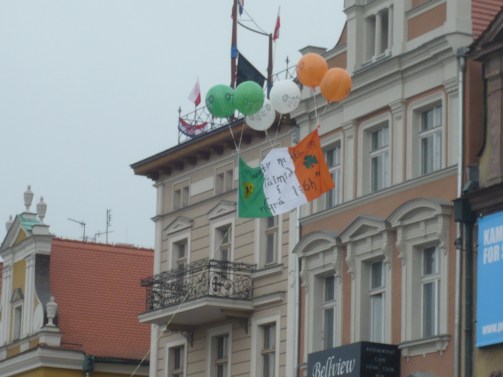


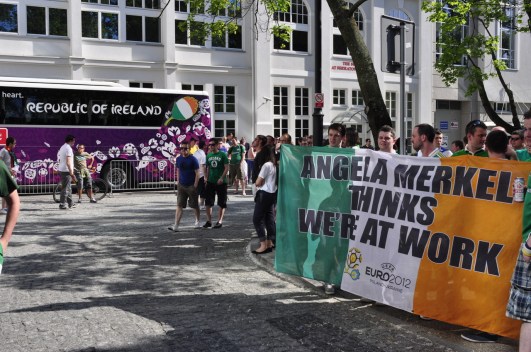

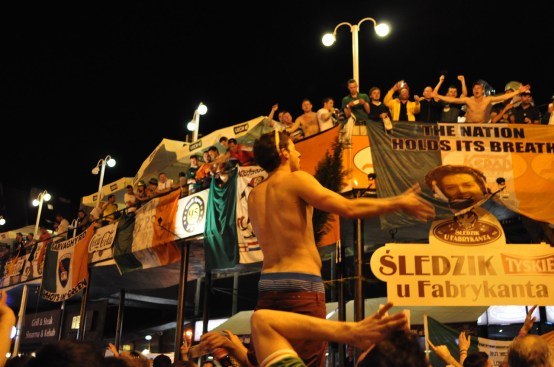


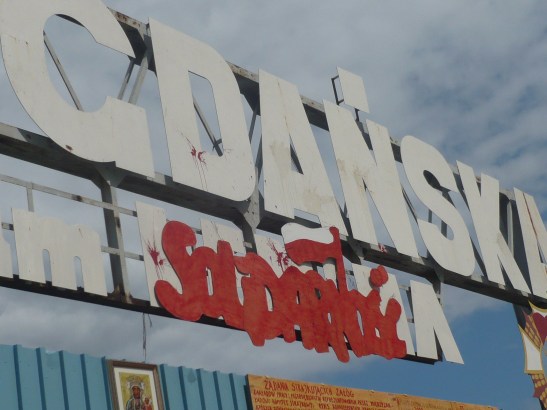

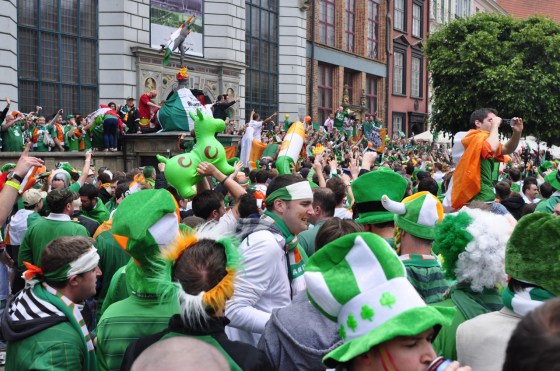


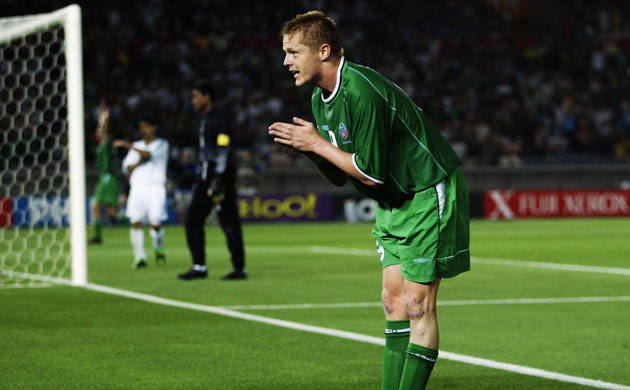


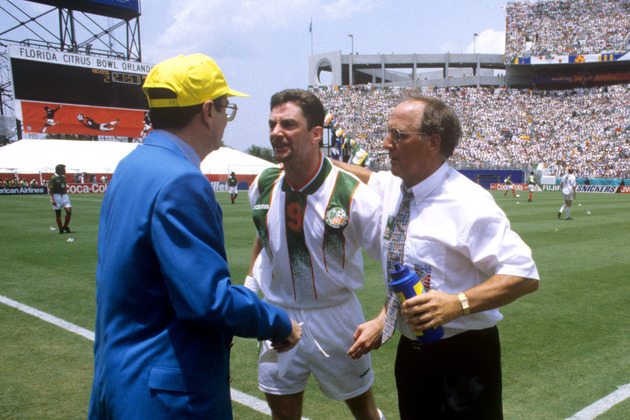




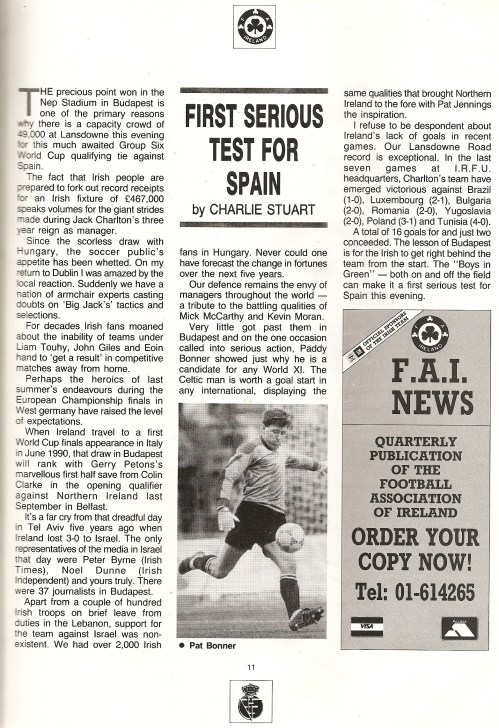
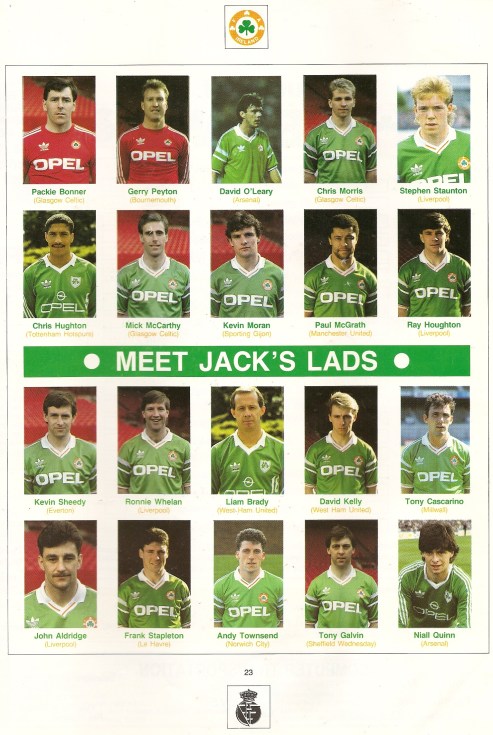


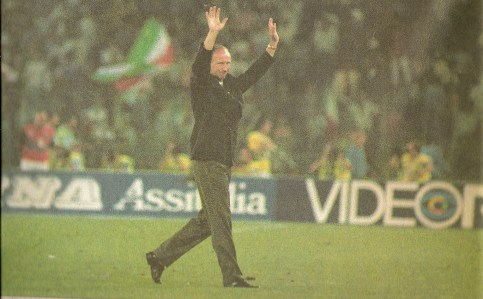

 Right, forget about the English Premiership; the tiresome nonsense around Mourinho; Leicester’s miracles; Spurs’ calamitous end of season; even forget about Saturday’s Champions League Final. Now is the time to get yourself in the mood for what has always been the ultimate feast of football – the Euros; the European Championships; the European Nations Cup! Of course the best way to get yourself in the mood for football is to go to some more football, so once we’ve waved the lads off from Dublin and Cork this week, have a look

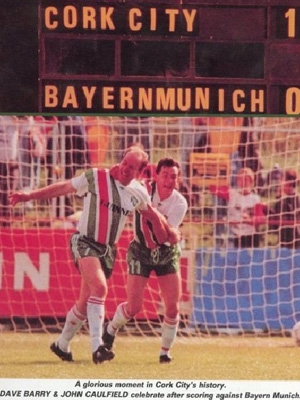
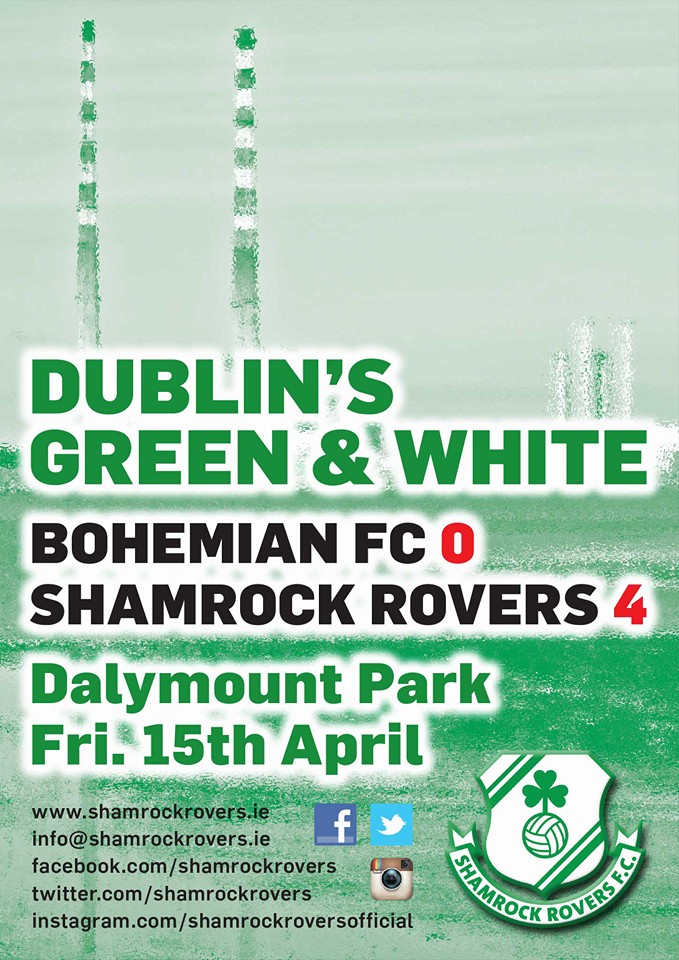


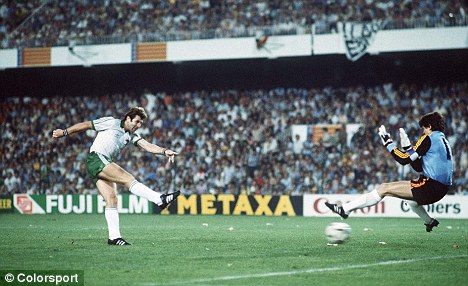
 A
A
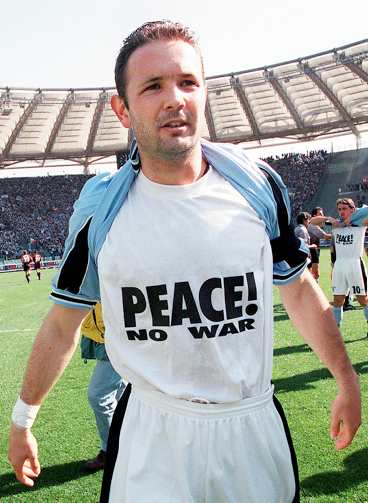
 A Yard of Grass